Best Korean Cleansing Oils for Every Skin Type (2026)
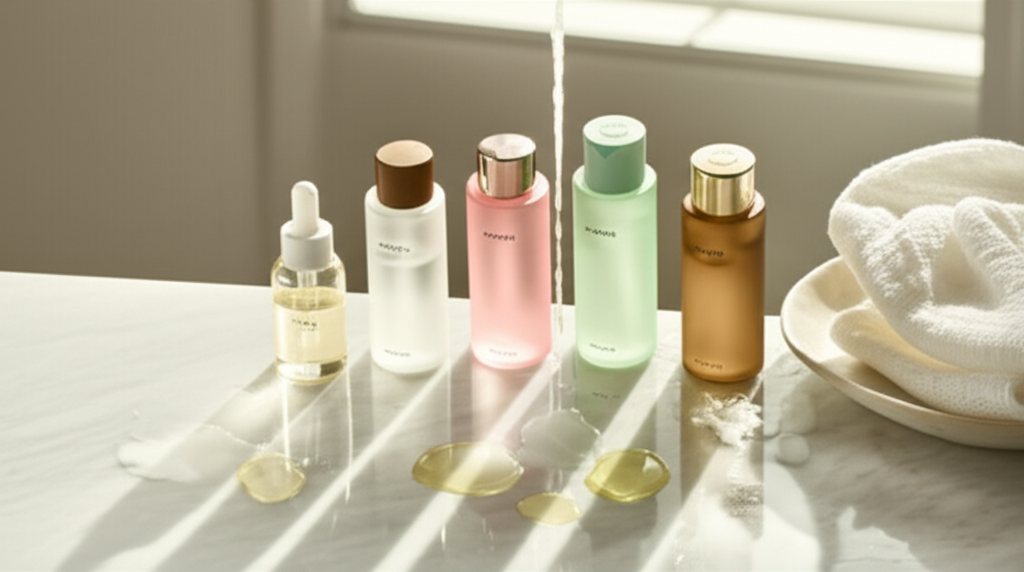
Korean cleansing oils are the essential first step in any double-cleanse routine, but picking the wrong one can leave your skin greasy, dry, or broken out. Here's how to match a cleansing oil to your actual skin type and get the most out of your K-beauty routine.
What's the Best Korean Cleansing Oil for Your Skin Type?
Quick Answer
Question: Which Korean cleansing oil should I use for my skin type?
Answer: It depends almost entirely on the base oil in the formula, not the brand name or how many likes it got on TikTok. If your skin runs oily or you're prone to breakouts, look for lightweight plant-derived bases like grape seed, sunflower, or safflower oil. These emulsify cleanly and don't leave residue sitting in your pores overnight. If you lean dry or sensitive, richer options built around jojoba, rice bran, or camellia oil will dissolve your sunscreen and makeup without stripping away moisture your skin actually needs. The non-negotiable for any skin type: the formula has to emulsify fully with water. If it doesn't rinse clean, it doesn't matter how good the ingredients are.
The Moment That Probably Brought You Here
Last Tuesday (or some Tuesday like it), you spent twenty minutes massaging a cleansing oil into your face, added water, rinsed, patted dry, and then ran your fingers across your cheek only to feel... A film. A slippery, slightly tacky layer that made you wonder if you'd actually made your skin dirtier than before you started. Or maybe the opposite happened. You tried a cleansing oil that a beauty creator swore by, and within five days you had a constellation of tiny bumps along your jawline that weren't there before.
Either way, you probably did what most people do next: you Googled "best Korean cleansing oil" and got hit with a wall of product recommendations that all contradicted each other. One list says mineral oil is fine, another says it's comedogenic. One blogger swears by a product you can't even find with English-language packaging. And the one you can find on Amazon has reviews split between "holy grail" and "gave me cystic acne," which is not that helpful.
I want you to try something right now if your current cleansing oil is nearby. Flip it over and look at the first three ingredients after water (if water is even listed). Can you identify the base oil? Do you know whether that oil is a good match for your skin type? If you're staring at a Korean label and can't read a single line of it, that's an incredibly common problem, and it's probably the reason your cleansing oil isn't working the way you expected. If you're stuck on a label, ask Yuri right here on this page. She's free, needs no signup, and can talk you through what's actually in the bottle.
Why Most People Pick the Wrong Cleansing Oil
The concept behind oil cleansing is genuinely simple. Oil dissolves oil, so a cleansing oil should break down your sunscreen, makeup, and excess sebum, then emulsify with water so everything rinses away. In practice, though, Korean cleansing oil formulas are all over the map. The base oil, the type and concentration of emulsifying agents, the added actives, even the pH of the formula can vary dramatically between products that look nearly identical on the shelf.
And that variation matters more than most people realize. A cleansing oil built around mineral oil has a completely different molecular weight and skin-feel than one built around camellia or rice bran oil. If the emulsifier ratio is too low, the oil won't break into tiny enough droplets to rinse clean, and you wake up with clogged pores. If it's too high, the formula can feel stripping and irritating, especially on dry or sensitized skin.
But the formulation issue is only half the problem. The bigger issue is how people choose these products in the first place.
Most of us pick a cleansing oil because someone with great skin recommended it on social media. That's understandable, but it's basically useless as a selection method. The creator who's raving about a thick, balm-style cleanser might have dry skin and live in a cold, low-humidity climate. If you have oily, congestion-prone skin and live somewhere humid, that same product will sit on your face like a second skin. Your individual lipid balance, the hardness of your tap water, whether you wear mineral or chemical sunscreen filters: all of these things influence which cleansing oil formula will actually work for you, and none of them show up in a 60-second product review.
Then there's the language barrier, which is a surprisingly big deal. Many of the best-formulated Korean cleansing oils are made primarily for the domestic Korean market. The ingredient lists, usage instructions, and even expiration dates are printed in Korean. So unless you can read Korean or you're willing to cross-reference every ingredient through an online database (which, let's be real, almost nobody does consistently), you're making a semi-blind purchase.
What Actually Works
1. Match the base oil to your skin type, not to whatever's trending
This is the single most important decision you'll make, and it has nothing to do with packaging or brand reputation. The base oil typically makes up 60 to 80 percent of a cleansing oil formula, so it's doing most of the work. You can find it in the first three items on the ingredient list (assuming you can read the ingredient list, which we'll get to).
| Skin Type | Best Base Oils | Oils to Approach with Caution |
|---|---|---|
| Oily / Acne-Prone | Grape seed, sunflower, safflower, hemp seed | Coconut oil, cocoa butter, heavy mineral oil blends |
| Dry / Dehydrated | Jojoba, olive, rice bran, camellia, sweet almond | Light mineral oil on its own (can feel stripping) |
| Sensitive / Rosacea-Prone | Jojoba, squalane, centella-infused formulas | Fragrant essential oils, citrus-derived extracts |
| Combination | Sunflower, jojoba, light olive blends | Anything extremely heavy or extremely lightweight |
A quick note on mineral oil, because it comes up constantly: it's not inherently bad. Cosmetic-grade mineral oil is non-comedogenic for most people and it's an effective solvent. But cheaper formulations sometimes use lower-grade mineral oil or pair it with weak emulsifiers, and that's where problems start. If you see mineral oil as the base and you've had clogging issues before, it's worth trying a plant-derived alternative to see if that's the variable causing trouble.
You can look up any of these oils in Seoul Sister's Ingredient Encyclopedia to check comedogenic ratings and safety profiles for your specific skin type.
Grounded picks by skin type
These are pulled from our catalog and filtered for review volume, because a 5-star rating from nine people tells you nothing. Prices are as-of-date rather than live quotes.
Oily or acne-prone: Anua Heartleaf Pore Control Cleansing Oil, about $22.50 for the double set at Olive Young, 4.7 stars across roughly 5,200 reviews. Heartleaf-based and formulated specifically for congestion, and it emulsifies cleanly, which is the failure point most people actually hit.
Dry or dehydrated: Beauty of Joseon Ginseng Cleansing Oil, about $17 at Olive Young, roughly 6,800 reviews. Rich enough to leave skin comfortable rather than squeaky, which is what dry skin needs from the first cleanse.
Sensitive: Klairs Gentle Black Deep Cleansing Oil, about $15.50 at Olive Young, 4.6 stars across roughly 4,800 reviews. Built around a low-irritation formula, from a brand whose whole range is aimed at reactive skin.
Budget pick: The Face Shop Rice Water Bright Light Cleansing Oil, about $9.50 at Olive Young, roughly 7,200 reviews. The cheapest genuinely well-reviewed option in the catalog, and light enough for combination skin.
If you prefer a balm to an oil: Banila Co Clean It Zero Cleansing Balm Original, about $20 at Olive Young, roughly 18,200 reviews, which makes it the single most-reviewed cleanser in our entire catalog. Balms are less likely to end up down the sink and travel better. The Purifying version (about $17) is the one to choose if you are oily.
The honest limitation: a cleansing oil's job is removing sunscreen, makeup, and sebum. It is not a treatment step. No cleansing oil will clear congestion on its own, because it is on your face for sixty seconds and then it is gone.
2. Test the emulsification before you commit
Before you judge any cleansing oil, do this: apply a small amount to dry skin on the back of your hand, massage for 30 seconds, then add a few drops of water and keep massaging. The oil should turn milky white within about 10 to 15 seconds. If it stays greasy and transparent, or if it only partially emulsifies and leaves streaks, that formula is going to leave residue on your face no matter how thoroughly you rinse.
This is a two-minute test that will save you weeks of breakouts and frustration. I genuinely wish someone had told me this years ago instead of letting me blame my skin for reacting to products that simply weren't rinsing off properly.
3. Pay attention to your water and your method, not just the product
Hard water (water with high mineral content) can interfere with emulsification. If you live in an area with hard water, you might need a cleansing oil with a stronger emulsifier system, or you may want to follow up with a gentle water-based cleanser as a second step. This is the classic Korean double-cleanse approach, and it exists for a reason.
Also, and I know this sounds basic, but give the oil enough time to work. A lot of people apply the oil, add water almost immediately, and then wonder why their sunscreen didn't come off. You need at least 60 seconds of dry massage before you introduce water. The oil needs time to bond with and dissolve the products on your skin. Rushing this step is probably the most common technique mistake in oil cleansing.
4. Adjust with the seasons (and your hormonal cycle)
Your skin isn't the same in January as it is in July, and if you menstruate, it's not even the same across a single month. A cleansing oil that works perfectly during a dry winter might feel too heavy once humidity rises in spring. Similarly, the week before your period when sebum production increases, you might find that your usual cleansing oil isn't cutting through the extra oil effectively.
This doesn't mean you need five different cleansing oils in rotation. But it does mean you should pay attention to how your skin responds over time rather than assuming one product will work identically year-round. Having a lighter option for summer or high-sebum days and a richer one for winter or drier phases of your cycle is a practical approach that most skincare advice ignores completely. A quick note on your phone about when your skin runs oilier or drier is enough to spot the pattern after a month or two.
5. Know what you're actually buying
This is where the Korean label issue becomes a real obstacle. If you can't read the ingredient list, you can't verify the base oil. You can't check for potential irritants. You can't confirm the PAO (period after opening) date, which tells you how long the product is safe to use once opened. And if you're buying Korean products through third-party resellers, you also can't easily verify authenticity, which means you might be paying $30 for a counterfeit that doesn't contain what the original formula contains.
If you hit any of these walls, start a free chat with Yuri on this page. She needs no account, and can help you work out what's in a product, whether those ingredients suit your skin, and what to check before you hand over your money. For researching individual ingredients yourself, the Ingredient Encyclopedia is open to everyone.
6. Don't overpay for the same formula
One more thing worth mentioning: pricing transparency in K-beauty is, to put it mildly, inconsistent. The same cleansing oil that retails for roughly $12 in a Korean drugstore can show up on a U.S. Marketplace for $35 with no real explanation for the markup beyond import convenience. Sometimes that markup reflects legitimate shipping and import costs. Sometimes it doesn't. Either way, it's worth knowing the original retail price before you decide whether a product is worth the asking price. Seoul Sister's Price Comparison shows you the same product across multiple retailers (Olive Young, Soko Glam, and iHerb among them) so you can make an informed call.
Frequently Asked Questions
Can I use a Korean cleansing oil if I don't wear makeup?
Absolutely. Cleansing oil isn't just for removing makeup. It's excellent at dissolving sunscreen (especially waterproof mineral sunscreens, which regular cleansers often leave behind), excess sebum, and the general environmental grime that accumulates on your skin throughout the day. If you wear sunscreen daily, which you should, an oil cleanse is one of the most reliable ways to make sure it's fully removed before your evening routine.
How do I know if my cleansing oil is causing breakouts vs. Purging?
Cleansing oils don't cause purging. Purging is a reaction to active ingredients that increase cell turnover, like retinoids or AHAs. If you start a new cleansing oil and develop breakouts, especially in areas where you don't normally break out, that's a reaction to the product. Stop using it, give your skin a week to calm down, and try a formula with a different base oil. The table above is a good starting point.
Should I double cleanse every night?
If you wear sunscreen, makeup, or both, double cleansing in the evening is generally a good idea. Your oil cleanser handles the oil-soluble stuff (sunscreen filters, makeup, sebum), and a gentle water-based cleanser afterward catches anything left behind. In the morning, though, most people don't need an oil cleanse. A simple water-based wash or even just water is usually enough unless your skin is exceptionally oily.
What's the difference between a cleansing oil and a cleansing balm?
They work on the same principle, but the texture is different. Cleansing balms are solid or semi-solid at room temperature and melt into an oil when you warm them between your hands. They tend to feel richer, which some people prefer and others find too heavy. In terms of effectiveness, there's no inherent advantage to one format over the other. It comes down to the base oil, the emulsifier quality, and your personal texture preference.
How do I read the ingredient list if it's entirely in Korean?
This is a real barrier, and it's one of the reasons Seoul Sister exists. Type the ingredient names you can make out into the Ingredient Encyclopedia, which has detailed profiles for 8,200+ ingredients with safety ratings and effectiveness data. And if you're stuck on the label itself, you can start a free chat with Yuri right here on this page, no account needed.
Is it worth importing cleansing oils directly from Korea instead of buying from U.S. Retailers?
It can be, especially for products with significant markups. But there are trade-offs: longer shipping times, potential customs delays, and the risk of buying from sellers who aren't authorized retailers. If you go this route, verify the seller's reputation carefully and check the manufacturing and expiration dates when the product arrives. Seoul Sister's product database lets you compare prices across retailers, and if you want a second opinion on whether importing a specific product makes sense, ask Yuri here on this page, free and no signup.