Best Korean Skincare for Dark Spots: What Actually Fades Hyperpigmentation (And What's Just Marketing)
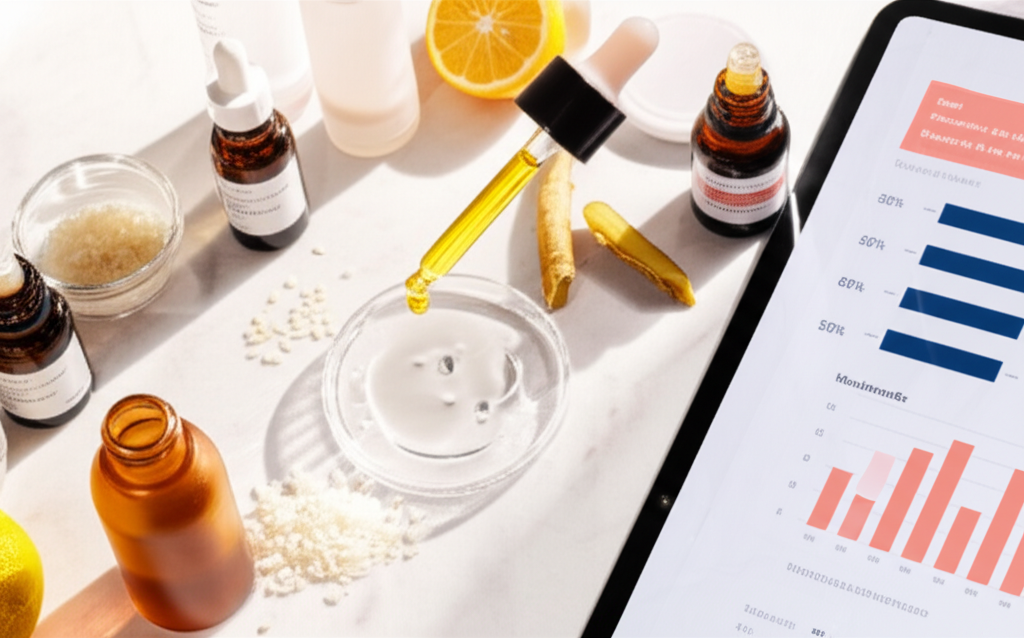
Dark spots and hyperpigmentation are some of the most frustrating skin concerns to treat, and K-beauty has some genuinely effective solutions. We break down the ingredients that actually work, how to layer them properly, and which Korean products deliver real results.
Best Korean Skincare for Dark Spots: What Actually Fades Hyperpigmentation (And What's Just Marketing)
Quick Answer
Question: Which Korean skincare ingredients and products actually work for dark spots and hyperpigmentation?
Answer: The K-beauty ingredients with the strongest clinical evidence for fading dark spots are niacinamide (2-5%), stabilized vitamin C (like ethyl ascorbic acid at 10-20%), alpha-arbutin (1-2%), tranexamic acid (2-3%), and rice ferment filtrate. Korean formulations tend to layer multiple brightening agents at gentler concentrations rather than relying on one aggressive active, and research supports this approach as equally effective with less irritation. But the catch most people don't talk about is that you need 8 to 12 weeks of consistent, daily use before you'll see meaningful fading. Most people quit at week four, switch products, and accidentally reset the whole process.
That Dark Spot That Won't Leave
I want you to think about the last time you looked in the mirror and your eyes went straight to it. That acne mark from three months ago. The melasma patch that crept in during pregnancy and apparently decided to stay permanently. The uneven tone along your jawline that you've been color-correcting every single morning because nothing topical seems to touch it.
You've probably already tried things. Maybe a vitamin C serum that oxidized and turned brown in the bottle before you even finished it. Maybe a "brightening" toner you grabbed because it had 47,000 likes on TikTok, only to realize later that the actual brightening ingredient was listed dead last on the label, meaning there's barely a trace of it in the formula. Maybe you spent $38 on something that costs $11 in Seoul and you're not even sure it's the real product.
The frustrating part isn't that solutions don't exist. They do. Korean skincare research has been obsessively focused on melanin regulation for decades, and some of the most effective brightening ingredients in the world were developed in Korean and Japanese labs. The frustrating part is that the information gap between what's available and what you can actually understand and verify is enormous. When you can't read the ingredient label, can't confirm the concentration, and can't tell whether a product is authentic, you're basically spending money on hope.
So let's fix that.
Why Dark Spots Are So Stubborn (And Why You Keep Wasting Money)
All hyperpigmentation involves excess melanin, but that's a bit like saying all headaches involve your head. The cause matters because it changes the treatment.
Post-inflammatory hyperpigmentation (PIH) is what you get after acne, a bug bite, or any skin trauma. Your skin overproduces melanin at the injury site as part of the healing response. PIH tends to respond well to topical treatments, especially in lighter skin tones, though it can be more persistent and sit deeper in darker skin. If PIH is specifically what you are dealing with, we go deeper on it in our guide to Korean skincare for PIH and post-acne dark spots.
Melasma is hormonally driven and often triggered or worsened by sun exposure, birth control, or pregnancy. It's notoriously stubborn because even when you fade it, the underlying trigger can bring it right back. Tranexamic acid has become a standout ingredient specifically for melasma, which is why you're seeing it in more Korean formulations lately. If you notice your melasma flaring at predictable points in your cycle, jot the timing down; it makes it easier to stay consistent with sunscreen and your brightening treatments during the weeks that matter most.
Sun spots (solar lentigines) come from cumulative UV damage over years. They're common on cheeks, forehead, and hands, and they generally respond to consistent use of vitamin C and arbutin, though deeper spots sometimes need professional treatment.
The reason Korean skincare has become so dominant in this category isn't just marketing. Korean cosmetic science has invested heavily in tyrosinase inhibitors (the enzymes that kick off melanin production) and has developed ingredients like arbutin and galactomyces ferment filtrate that you still won't find in most Western drugstore products. The research pipeline out of Korean universities and cosmetic labs is genuinely impressive on this front.
But that research advantage gets completely undermined when consumers can't access the information they need. And there are a few specific ways this plays out that cost you real money and time:
The concentration problem. A product can legally list niacinamide as an ingredient whether it contains 5% or 0.01%. Korean labels list ingredients in descending order of concentration, just like Western products, but if you can't read Korean, you can't even use that basic clue to gauge potency. I've seen "brightening essences" where the star ingredient was listed after fragrance, which means there's almost nothing in there. If you're unsure what a label is actually telling you, ask Yuri right here on this page; she's free, needs no signup, and can help you work out where each active falls in the ingredient order.
The patience problem. Melanin sits at different depths in your skin. Surface-level pigmentation from a recent breakout might start fading in six weeks. Deeper melasma or old sun damage can take four to six months. Most people see no dramatic change at week three, assume the product is useless, and switch to whatever's trending that week. Each restart means another 8-to-12-week clock beginning from zero. Over a year, someone doing this might spend $150 or more on products that were actually working but never got the chance to prove it. A weekly photo helps here: take one in the same light and at the same angle each week, then compare the photos rather than your memory, so you can see gradual improvement the mirror won't show you.
The layering problem. You might be using two products that cancel each other out. Vitamin C (especially L-ascorbic acid) at low pH and niacinamide were long rumored to conflict, and while more recent research suggests they're fine together, there are real conflicts people stumble into. Using a brightening acid alongside retinol on the same night, for example, can wreck your moisture barrier and actually worsen hyperpigmentation through inflammation. If you're building a multi-step Korean routine without understanding ingredient interactions, you can accidentally create the exact problem you're trying to solve.
What Actually Works: A Practical Breakdown
Step 1: Know the five ingredients with real clinical evidence
Not every ingredient that gets called "brightening" on a label has meaningful data behind it. These five do, and knowing them will immediately help you filter out the noise. You can read the full safety and efficacy data for each one in the Ingredient Encyclopedia.
| Ingredient | How It Works | Korean Label | Effective Concentration | Realistic Timeline |
|---|---|---|---|---|
| Niacinamide | Blocks melanin transfer from melanocytes to surrounding skin cells | 나이아신아마이드 | 2-5% | 8-12 weeks |
| Vitamin C (L-ascorbic acid or ethyl ascorbic acid) | Antioxidant that directly interrupts melanin synthesis | 아스코르빅애시드 / 에틸아스코르빅애시드 | 10-20% (LAA) or 1-3% (EAA) | 8-12 weeks |
| Alpha-arbutin | Inhibits tyrosinase, the key enzyme in melanin production | 알파알부틴 | 1-2% | 8-12 weeks |
| Tranexamic acid | Reduces melanin synthesis through a different pathway; especially effective for melasma | 트라넥사믹애시드 | 2-3% topical | 8-16 weeks |
| Rice extract / Galactomyces ferment filtrate | Contains naturally occurring kojic acid and ferulic acid | 쌀 추출물 / 갈락토미세스발효여과물 | Varies (usually used as a base essence) | 12+ weeks |
A few things worth noting. Ethyl ascorbic acid is more stable than L-ascorbic acid, which is why Korean brands have increasingly shifted toward it. You won't get the oxidation-turning-brown problem as quickly. Tranexamic acid is relatively newer in the Western skincare conversation but has been used in Korean and Japanese products for years, and the clinical data for melasma specifically is genuinely compelling. And galactomyces ferment filtrate (the star ingredient in products like the SK-II essence and its Korean equivalents) works more gently and gradually, making it a good "always on" base layer rather than a targeted treatment.
Grounded picks for each of those ingredients
Knowing the five ingredients is most of the battle, but you still have to buy something. These are from our catalog, filtered for verified listings with real review volume rather than rating alone, because sorting by stars alone surfaces a wall of 5.00 ratings from two people. Prices are as-of-date rather than live quotes.
| Ingredient | Grounded pick | About | Reviews |
|---|---|---|---|
| Niacinamide | Numbuzin No.3 Skin Softening Serum | $28 at Olive Young | ~8,200 |
| Vitamin C (derivative) | Neogen Dermalogy Real Vita C Serum | $19 at Olive Young | ~4,200 |
| Alpha-arbutin | Beauty of Joseon Glow Deep Serum: Rice + Alpha-Arbutin | $11 at Olive Young | ~5,800 |
| Tranexamic acid | Numbuzin No.5+ Vitamin Concentrated Serum | $25 at Olive Young | ~5,400 |
| Rice / ferment | Beauty of Joseon Glow Deep Serum (rice-led) | $11 at Olive Young | ~5,800 |
Two notes on reading that table honestly. The Neogen serum leads with sodium ascorbyl phosphate, a derivative rather than pure L-ascorbic acid, which is the right trade for most people: you lose a little potency and you lose the stinging, the oxidation, and the irritation that generates fresh pigment in the first place. And the Numbuzin No.5+ is doing double duty, because its verified ingredient list carries tranexamic acid at 4% alongside niacinamide at 5%, so it covers two rows of this table in one bottle.
Pick two, not five. Stacking every brightener at once does not compound the effect. It compromises your barrier, and irritation makes pigmentation worse, which is the single most common way people spend six months going backwards.
Step 2: Build a realistic routine that doesn't sabotage itself
If you're dealing with dark spots, here's a practical framework. You don't need twelve steps. If you want a second pair of eyes on layering order and ingredient conflicts, you can ask Yuri for free right on this page, no account needed, but here's the general structure:
Morning:
- Gentle low-pH cleanser
- Vitamin C serum (apply to dry skin, wait 1-2 minutes for absorption)
- Moisturizer with niacinamide, or a separate niacinamide serum underneath moisturizer
- SPF 50+ PA++++ sunscreen, every single day, reapplied if you're outdoors
Evening:
- Oil cleanser (if you wore sunscreen or makeup)
- Water-based cleanser
- Tranexamic acid or arbutin treatment (serum or ampoule)
- Moisturizer
- Optional: sleeping mask 2-3 times per week for barrier support
Important layering notes: Don't use vitamin C and direct acids (AHA/BHA) in the same step. If you want to use an exfoliating acid, alternate nights or use it at a different time of day from your vitamin C. And if you're using retinol, keep it on separate nights from your acid exfoliants. Your moisture barrier is your best friend in this process because a compromised barrier leads to inflammation, and inflammation leads to more pigmentation.
Step 3: Sunscreen is non-negotiable, and Korean sunscreens make it easier
I know everyone says this. But with hyperpigmentation specifically, skipping SPF will literally undo everything your brightening products are doing. UV exposure triggers melanin production directly. You can use the most effective arbutin serum on the market, and if you're not wearing sunscreen daily, you're filling a bathtub with the drain open.
Korean sunscreens have an advantage here because they tend to be cosmetically elegant in ways that make daily wear actually pleasant. Lightweight, no white cast, work well under makeup. The PA++++ rating system also gives you more specific information about UVA protection (the type most responsible for pigmentation) than the broad-spectrum label used in Western products. Look for SPF 50+ and PA++++, and actually use enough of it. Two finger-lengths for your face is the standard recommendation.
That last point matters more than usual here, because of something most coverage leaves out: Korean sunscreens sold through US retail are frequently reformulated with FDA-approved filters and test measurably weaker than the Korean-market versions of the same product. Consumer Reports testing found Beauty of Joseon's SPF 36 came out around SPF 19 in the US, and Round Lab's SPF 46 tested near SPF 16. Even the Korean formulas came in under their SPF 50+ labels, so this is not "American bad, Korean good", and the gap is narrowing now that the FDA approved bemotrizinol in 2026. On a pigmentation routine, where SPF is the step protecting all the others, that is a reason to apply generously and reapply rather than a reason to switch. Seoul Sister's best Korean sunscreens list is a good starting point, and Yuri, the free advisor on this page, can help you narrow it down by skin type and finish preference, no signup needed.
Step 4: Track your progress properly
Take a photo of your dark spots in the same lighting, same angle, same time of day, once a week. Our brains are terrible at noticing gradual change, which is exactly why people quit products that are working. A weekly photo series over eight weeks will show you fading that you'd never notice just looking in the mirror each morning.
Also, and this is something most guides skip, pay attention to how your skin changes with your hormonal cycle and with the seasons. Melasma in particular can flare around menstruation or during summer months. If you notice your spots getting worse at predictable times, that's useful information for adjusting your routine, maybe increasing tranexamic acid usage in the two weeks before your period, or switching to a richer, more protective moisturizer in winter when your barrier is more vulnerable.
Where Seoul Sister Fits Into This
We built Seoul Sister because we kept running into the same problems ourselves. You find a Korean product that sounds perfect for your skin, but you can't read the ingredient list to confirm the active concentration. You order it online and aren't sure if it's authentic or a counterfeit sitting in a warehouse past its expiration date. You don't know if the $34 you're paying is reasonable or a 300% markup on something that retails for $10 in Olive Young.
Seoul Sister gives you the ingredient transparency and price context that makes it possible to actually follow through on everything in this article. The easiest place to start is Yuri, the free AI skincare advisor right here on this page. No account needed; she can help you check whether a brightening ingredient sits high enough in a product's ingredient list to matter, and whether your routine is layering things that conflict. The Ingredient Encyclopedia covers the actives in this article in depth, and the product database shows you the same product priced across multiple retailers including Olive Young, Soko Glam, and iHerb so you know whether that $34 price tag is fair.
The information in this article is useful whether you ever use Seoul Sister or not. But if you've been stuck in the cycle of buying, hoping, quitting, and restarting, having a tool that removes the guesswork can be the difference between finally seeing results at week ten and giving up at week three for the fourth time.
Common Questions
Q: Can dark spots be completely removed with skincare alone? It depends on the type and depth. Surface-level PIH from acne often fades completely with consistent topical treatment and sun protection. Deeper melasma may fade significantly but can recur with hormonal changes or sun exposure. Very deep or long-standing sun spots sometimes need professional treatments like laser or chemical peels in addition to topical care. Skincare alone can do a lot, but setting realistic expectations matters.
Q: Do Korean "whitening" products contain bleach? No. This is a translation issue that confuses a lot of people. In Korean beauty, "미백" (mibaek, translated as "whitening") is the regulatory term for products that brighten skin tone and reduce melanin production. It's the equivalent of what Western brands call "brightening." No bleaching agents are involved. The Korean FDA (MFDS) regulates these claims and approved ingredients, so a product labeled 미백 has passed specific efficacy standards.
Q: Why do some Korean products work for my friend but not for me? Skin type, skin tone, the specific type of hyperpigmentation, your hormonal profile, and even your climate all affect how you respond to a product. Someone with PIH from acne on oily skin will have a very different experience with the same serum than someone with melasma on dry skin. This is also why ingredient knowledge matters more than product recommendations. If you know that tranexamic acid targets your specific type of pigmentation, you can find the right product for your skin rather than copying someone else's routine. Yuri, Seoul Sister's AI skincare advisor, can help you figure out which actives match your specific skin type, concerns, and goals. She's free to chat with right here on this page, no account needed.
Q: How do I know if a K-beauty product I bought online is real? Counterfeits are a genuine problem, especially on third-party marketplace sites. Signs of authenticity include batch codes that can be verified on the manufacturer's website, proper Korean labeling (not just English stickers), and purchase from authorized retailers. Seoul Sister's guide to spotting fake Korean skincare walks through a five-point check you can run before you commit.
Q: Is it safe to use multiple brightening ingredients at once? Generally yes, and Korean formulations are actually designed around this principle. Combining niacinamide, arbutin, and rice extract in the same routine is common and well-tolerated because they work through different mechanisms. The combinations to be careful with are vitamin C plus strong acids at the same time (too much pH disruption), and any brightening actives plus retinol on the same night if your skin is sensitive. Start with one new product at a time, give it two weeks to confirm your skin tolerates it, then add the next one.