How to Get Glass Skin: A K-Beauty Routine That Works
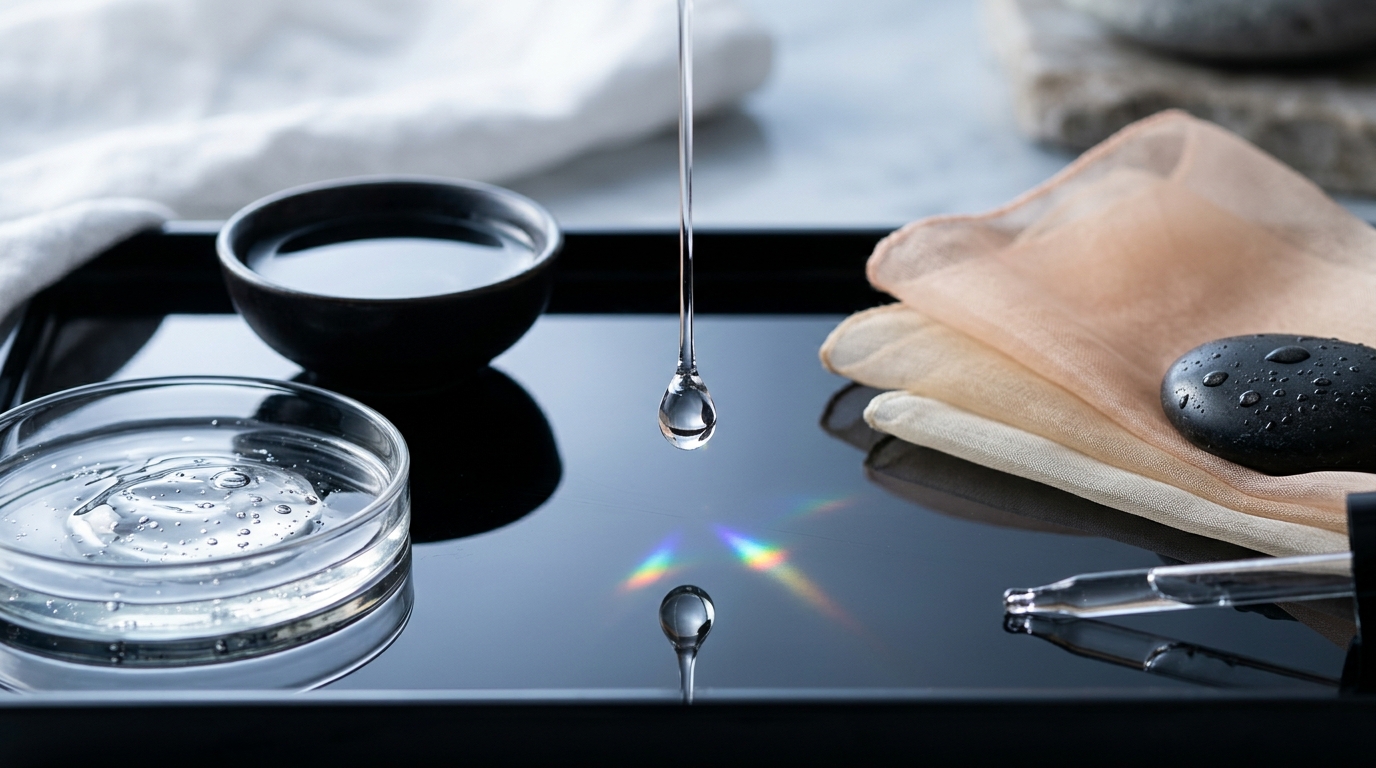
Glass skin is that translucent, almost impossibly dewy look that keeps showing up on your feed. But getting there isn't about buying ten new products. It's about the right ingredients, correct layering, and understanding what your skin actually needs.
How Do You Actually Get Glass Skin With a K-Beauty Routine?
Quick Answer
Question: What's the best Korean skincare routine for achieving glass skin?
Answer: Glass skin comes from layering lightweight, hydrating products in the correct order to build moisture without clogging pores. The core of any glass skin routine is double cleansing, a hydrating toner (applied in multiple thin layers), a serum with hyaluronic acid or niacinamide, and a moisture barrier sealant. It typically takes 4 to 6 weeks of consistent use before you'll see that translucent, lit-from-within effect, so take a baseline photo in natural light before you start and judge your progress against evidence rather than memory.
The Situation You're In
You've seen it a hundred times on TikTok and Instagram: someone turns their face toward the light and their skin looks like wet glass. Poreless. Luminous. Almost translucent. You screenshot the video, maybe even buy the exact product they mentioned, and two weeks later your skin looks... The same. Or worse, you've broken out because you layered three new serums without knowing they don't play well together.
Here's something you can do right now: pick up the last hydrating product you bought because of a social media recommendation and look at the ingredient list. Can you read it? If it's in Korean and you have no idea what's in it, you're essentially putting mystery liquid on your face and hoping for the best. Yuri, right here on this page, can help you work out what's in it, free and with no signup, before you put anything on your face. That disconnect between what you see online and what you can actually verify is a big part of why glass skin feels so out of reach.
You're not alone in this, and there are proven approaches that work.
Why This Happens
Glass skin became a global beauty obsession because it represents something specific: skin so healthy and hydrated that it reflects light evenly. But most of the content you'll find about it online is either a product dump with affiliate links or a 30-second video that skips over the parts that actually matter. Nobody talks about why certain ingredients need to go before others, or why the same routine that gives one person glass skin gives another person clogged pores.
The confusion gets worse when you factor in product authenticity and ingredient transparency. A lot of K-beauty products sold through third-party resellers have been reformulated for different markets, are nearing expiration, or in some cases aren't genuine at all. If you're working with a product that's past its Period After Opening (PAO) date, the active ingredients may have degraded to the point where they're doing nothing for you. You wouldn't know unless you tracked when you opened it, so write the open date on the bottom of each container when you first crack the seal. And if you're worried a purchase isn't genuine, Seoul Sister's guide to spotting fake Korean skincare walks through the checks that catch most counterfeits.
There's also a layering problem that trips up almost everyone. Korean skincare routines can involve anywhere from 5 to 10 steps, and the order matters enormously. Putting a heavy occlusive before a water-based serum means that serum sits on top of your skin instead of absorbing. Piling three actives into one routine when your barrier is already unhappy leaves you red and stinging. These aren't catastrophic mistakes, but they're enough to make you think glass skin "just doesn't work for me" when really the method was off.
What Actually Works
1. Start with a genuinely clean canvas (double cleanse properly)
Glass skin is impossible on a face that still has sunscreen residue or makeup film sitting on it. Use an oil-based cleanser first to dissolve oil-soluble debris, then follow with a low-pH water-based cleanser. The key detail most people miss: your skin should feel clean but not tight after step two. If it feels squeaky, your second cleanser is too stripping, and you're damaging your moisture barrier before you even start building hydration.
2. Layer hydration thin and often (the 7-skin method, adapted)
The classic Korean approach to building that glass-like moisture is applying a lightweight hydrating toner in multiple thin layers rather than one thick application. You don't necessarily need seven layers. Three to five is usually enough. Pat each layer in with your palms and wait about 15 seconds before the next one. Look for toners with hyaluronic acid, beta-glucan, or centella asiatica. Check the actual ingredient list (not just the marketing claims) to confirm the hydrating actives are near the top of the INCI list, which means they're present in meaningful concentrations. The Ingredient Encyclopedia can help you verify what each ingredient actually does and whether it's effective for your skin type.
3. Pick one targeted serum, not three
This is where most people overcomplicate things. For glass skin specifically, niacinamide (around 5%) is probably the single most effective serum ingredient because it improves skin texture, reduces the appearance of pores, and strengthens the moisture barrier all at once. If you're also dealing with dullness, a vitamin C serum in the morning can add that extra brightness, and it is fine to use alongside niacinamide despite the old myth that the two cancel each other out. But resist the urge to stack multiple actives. More products doesn't mean more glow. It often means more irritation.
Grounded picks for each step
Ingredients are the thing that matters, but "look for a hydrating toner" is not much help when you are standing in front of 200 of them. These come from our catalog, filtered for real review volume rather than rating alone, because a 5-star average from nine people is noise. Prices are as-of-date, not live quotes.
Hydrating toner (the layering step): the Isntree Hyaluronic Acid Toner Plus (about $20 at Olive Young, roughly 8,400 reviews) is the workhorse here. Sodium PCA and sodium hyaluronate near the top of the list, panthenol behind them, no fragrance. It layers without pilling, which is the practical requirement when you are patting on three to five rounds. The Haruharu Wonder Black Rice Hyaluronic Toner (about $14, roughly 7,200 reviews) is the cheaper equivalent.
Niacinamide serum: the Numbuzin No.3 Skin Softening Serum (about $28, roughly 8,200 reviews) pairs niacinamide with fermented ingredients that support turnover gently. If you have reacted to high-percentage niacinamide before, that is a real thing that happens to a minority of people, so start lower rather than pushing through it.
Gel-cream to seal: the iUNIK Centella Calming Gel Cream (about $15.50, 4.6 stars across roughly 5,800 reviews) gives you the seal without the weight. If your skin runs dry rather than combination, the Illiyoon Ceramide Ato Concentrate Cream (about $17, roughly 15,200 reviews, the most-reviewed moisturizer in our catalog) is the better call.
The honest limitation: none of these produce glass skin on their own, and no product will give you the poreless look in the videos, because a meaningful part of that is lighting, camera, and often a blurring primer. What these do is genuine: better hydration, more even light reflection, and healthier texture over four to six weeks.
4. Seal everything in without suffocating your skin
The final step is a moisturizer that locks in all those hydrating layers without leaving a heavy or greasy film. Gel-cream textures tend to work best for the glass skin look because they add moisture without mattifying or creating a thick layer. If you have drier skin, a sleeping mask two to three nights a week can boost the effect. And during the day, always finish with SPF. UV damage is the single fastest way to undo every bit of hydration and clarity you've built. Seoul Sister's best Korean sunscreens list is a good place to find a Korean SPF that won't leave a white cast or heavy finish over your carefully layered hydration.
5. Track what you're using and when you opened it
This is the boring but critical part that nobody on TikTok mentions. Products with active ingredients lose potency over time, especially after opening. That vitamin C serum that's turned orange? It's oxidized and potentially irritating rather than helpful. Keep track of your product opening dates so you know when something has passed its effective window. Your routine is only as good as the products in it, and expired products can actually work against your glass skin goals.
6. Let your routine adapt to your environment
This is something most glass skin guides skip entirely. Humidity, UV levels, and temperature all affect how your skin holds moisture and how your products perform. A routine that gives you glass skin in a humid summer can leave you looking dull and dehydrated in a dry winter. Expect to swap your moisturizer weight and your number of toner layers with the seasons rather than running the same routine year-round.
Frequently Asked Questions
What is glass skin in Korean skincare?
Glass skin refers to a complexion that's so well-hydrated and smooth that it appears almost transparent and reflective, like glass. It's not about wearing a dewy highlighter or facial mist for a temporary effect. True glass skin comes from consistent hydration layering and a healthy moisture barrier that reflects light evenly across the face. The most reliable way to measure progress is a photo in the same natural light every two weeks, compared side by side.
How many steps is a glass skin routine?
A practical glass skin routine can be as few as 5 steps: oil cleanser, water-based cleanser, hydrating toner (applied in multiple layers), one serum, and a moisturizer (plus SPF in the morning). You don't need a 10-step routine to get there. What matters more than the number of steps is using the right ingredients in the right order and being consistent over several weeks. If you want help with layering order or spotting ingredient conflicts, ask Yuri for free right here on this page, no account needed.
Can you get glass skin if you have oily or acne-prone skin?
Yes, but your product choices need to be different. Oily and acne-prone skin types should focus on lightweight, non-comedogenic hydrators like hyaluronic acid toners and gel moisturizers instead of rich creams. Niacinamide is especially helpful for oily skin because it regulates sebum production while still improving skin texture. The glass skin effect is about hydration, not oil, so even oily skin can achieve it with the right approach.
How long does it take to get glass skin?
Most people start noticing a visible difference in skin texture and luminosity after about 4 to 6 weeks of a consistent hydrating routine. Your skin's natural turnover cycle is roughly 28 days, so it takes at least that long for the deeper layers of hydration to show results on the surface. Patience is genuinely the hardest part of this process.
Do I need to use all Korean products for a glass skin routine?
You don't strictly need every product to be Korean, but K-beauty formulations tend to prioritize the lightweight, layerable textures that make glass skin achievable. Korean toners, in particular, are formulated differently from Western toners. They're hydrating rather than astringent, which is essential for this approach. If you're mixing brands from different markets, just make sure you understand what's in each product so you're not accidentally doubling up on actives or creating ingredient conflicts. Yuri can help with this for free, on this page, when you're working with products that have Korean-only packaging.
The Bottom Line
Glass skin isn't a genetic lottery or a filter. It's the visible result of consistent hydration, proper product layering, and knowing what you're actually putting on your face. The routine itself is simpler than most content online makes it seem. The hard part is cutting through the noise, choosing products with the right ingredients for your skin, and sticking with it long enough to see results.
If you've been chasing that glow and feeling like you're just throwing money at products that don't deliver, take a step back. Simplify. Check your ingredients. Track your products. The glass skin look is absolutely achievable, and it doesn't require a bathroom counter full of bottles you can't read.
If you want a baseline before you start, take a photo in natural light today and again every two weeks, and compare the photos rather than your memory. And if you need personalized help choosing products or building your routine, Yuri is Seoul Sister's AI skincare advisor with access to 5,800+ product profiles and real-time ingredient analysis. She's free to chat with right here on this page, no account needed.