How to Tell If Your Sulwhasoo First Care Serum Is Fake: 5 Checks Before You Use It
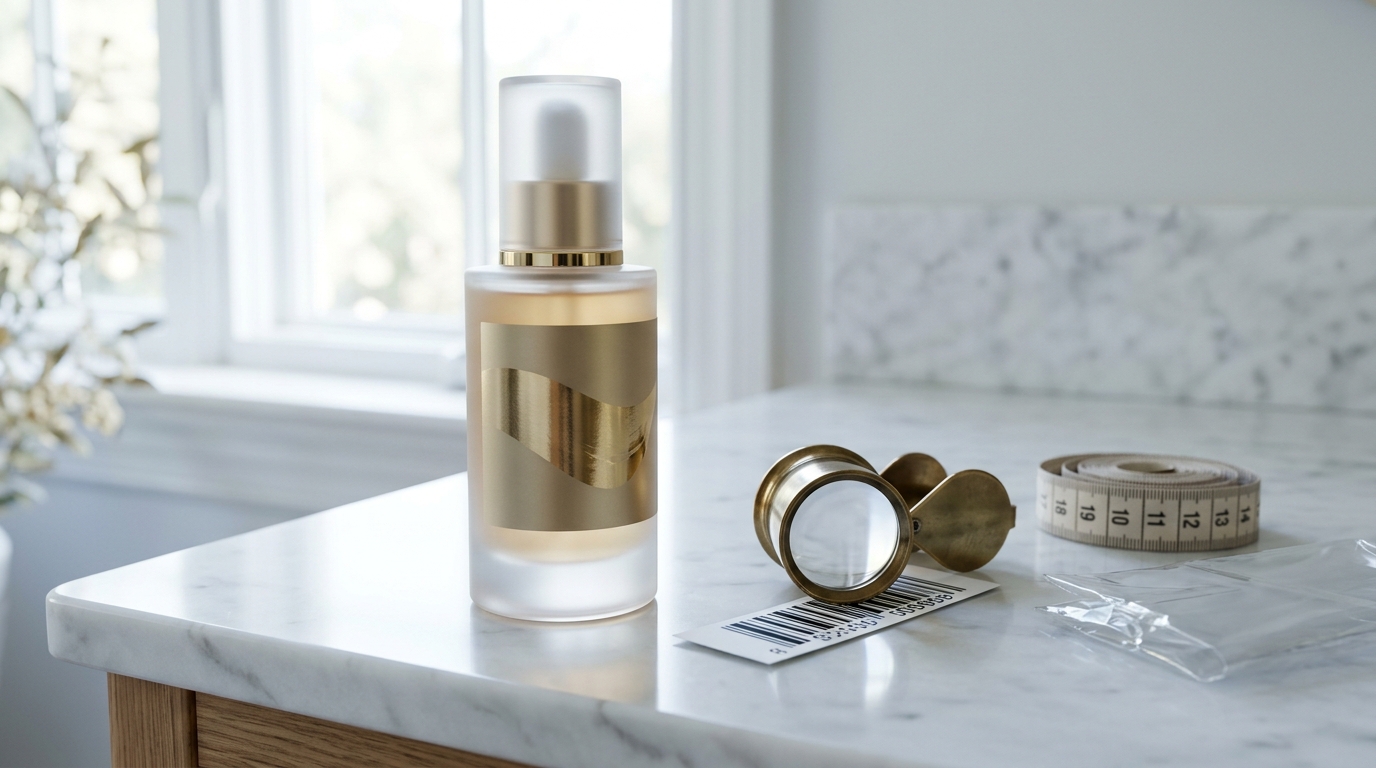
Sulwhasoo First Care Serum is a $90+ luxury product, which makes it one of the most counterfeited items in K-beauty. Here are five verifiable checks (from packaging weight to barcode origin) to confirm your bottle is real before it touches your face.
Quick Answer
Question: How can I tell if my Sulwhasoo First Care Serum is fake?
Answer: Check five things: the glass should feel noticeably heavy, the gold label should be real foil stamping that shifts and shines at an angle (not flat printed ink), the label should carry Korean text with MFDS registration for Korean-market bottles, the shrink wrap should be tight and professional, and the barcode may start with 880 (a weak supporting signal, since the prefix shows where the barcode was registered, not where the bottle was made). The heavy glass and real gold foil are your headline signals. If the price was dramatically below retail, treat that as a red flag before you even open the box.
The Situation You're In
You found a Sulwhasoo First Care Activating Serum for way under $90, snagged it, and now the box is sitting on your counter feeling... a little off. Maybe the glass seems lighter than you expected for a luxury bottle, or the gold on the label looks flat instead of that rich stamped shine you saw in the store. And now you're standing there thinking, "do I actually put this on my face, or did I just get scammed?"
Ugh, I know. Wasting money on skincare is bad enough, but putting a counterfeit on your skin (with who-knows-what inside it) is a whole different level of stress. So before you use it, let's run the checks.
Here's a two-second thing you can do right now while the bottle's in your hand: flip it over and look at the barcode. Note the first three digits. We'll come back to what they mean, but you'll want that number ready.
Why This Happens
Sulwhasoo gets counterfeited more aggressively than almost any other K-beauty brand, and it comes down to price. When a single serum retails for $90 and up, counterfeiters have huge margins to play with. They can sell a convincing fake at "50% off" and still pocket a fortune, which is exactly why the deep-discount listings on open marketplaces with third-party sellers are so tempting and so risky.
The other issue is that luxury Korean brands are genuinely hard to fake well, which ironically makes the fakes easier to catch once you know what to look for. Authentic Sulwhasoo uses heavy, high-quality glass and real gold foil stamping. Those materials cost money, so counterfeiters cut corners in predictable places. The lighter glass and the flat printed "gold" are shortcuts they take because doing it properly would eat their profit.
And the price gap between Korea and the US is real, which muddies the water. A product can legitimately cost less in Korea than it does at a US counter, so a lower price isn't automatically fake. The problem is that counterfeit sellers hide behind that real price gap to make their scam look like a legit deal. That's why you can't rely on price alone. You need the physical checks.
What Actually Works
1. Weigh it in your hand: authentic Sulwhasoo glass is heavy. Real Sulwhasoo uses dense, high-quality glass, so an authentic bottle has a substantial, weighted feel. Counterfeits use noticeably lighter, cheaper glass to save on cost. If you've ever held the real thing at a counter, a fake will feel flimsy by comparison. If you haven't, that thin, hollow feeling is your first warning sign.
2. Check the gold label at an angle. Authentic Sulwhasoo uses real gold foil stamping that has dimension and catches the light, shifting and shining as you tilt it. Counterfeits almost always use flat printed gold ink that looks dull and stays the same from every angle. Tilt the bottle under a lamp. Real foil moves. Printed ink just sits there flat.
3. Look for Korean text and MFDS registration. Legitimate Korean-market products display Korean text along with MFDS (Korea's Ministry of Food and Drug Safety) registration on the label. This is one of the strongest universal checks for any Korean skincare product, not just Sulwhasoo. One important caveat: bottles that were officially repackaged for US retail can carry US-market labeling instead, so a missing Korean label isn't damning if you bought from an authorized US retailer. This check matters most for marketplace purchases where the bottle is claimed to be Korean-sourced.
4. Read the barcode's first three digits (a supporting signal, not a verdict). Korean-registered products often carry a barcode starting with 880, but here's the nuance that matters: an 880 prefix tells you where the barcode was registered, not where the bottle was made. Authentic export or region-specific Sulwhasoo stock can legitimately carry a non-880 prefix, so a non-880 barcode is a weak signal on its own, never damning. The physical checks above, the heavy glass and the real gold foil, stay your headline signals; treat the barcode as a minor tiebreaker alongside them. This is the number I told you to grab earlier, so pull the bottle back out if you're curious.
5. Inspect the shrink wrap. Authentic Sulwhasoo comes with tight, professional-grade shrink wrap. Loose, wrinkled, or sloppy wrap is a warning sign that the box was tampered with, refilled, or produced by a counterfeiter without proper equipment. It's a smaller signal than the others, but sloppy packaging rarely comes from a brand charging $90 a bottle.
Where to buy so you skip all of this: The cleanest way to never worry about any of these checks is to buy from authorized retailers like Olive Young Global or Soko Glam. When you buy from a source the brand actually stocks, authenticity isn't a guessing game. The savings on a sketchy discount listing aren't worth putting an unknown formula on your face, especially a first-step serum that sits under your entire routine.
If you want to understand what you're actually paying for, the First Care Serum is built on Sulwhasoo's signature fermented herbal complex, which is what the brand's whole first-step philosophy is centered on. And if you're comparing first-step serums and essences in general, our best essences roundup is a good place to sanity-check whether a $90 bottle is even the right pick for your skin.
Still not sure if the bottle in your hand is legit, or whether it even suits your skin type? You can start a free chat with Yuri right here on this page, no account needed, and walk through your specific situation, from what you're seeing on the label to what your routine actually needs.
Frequently Asked Questions
Does a low price mean my Sulwhasoo is definitely fake?
Not automatically, but it's the biggest single red flag. There's a real Korea-versus-US price gap, so some legitimate discounts exist, but a price dramatically below retail on an open marketplace with third-party sellers is exactly the bait counterfeiters use. Run the physical checks (glass weight, gold foil, barcode) before you trust any deep discount.
What does a Sulwhasoo barcode starting with 880 mean?
A barcode beginning with 880 means the barcode was registered in South Korea, not that the product was necessarily made there. That distinction matters: authentic export or region-specific Sulwhasoo stock can legitimately carry a non-880 prefix, so a non-880 barcode is a weak signal on its own and never damning. Lean on the physical checks instead, the heavy glass and real gold foil are far more reliable. Treat the barcode as a minor supporting detail, not a verdict.
My Sulwhasoo doesn't have Korean text on the label. Is it fake?
Not necessarily. Bottles officially repackaged for US retail can legitimately carry US-market labeling instead of Korean text and MFDS registration. The Korean-label check matters most for marketplace purchases where the bottle is claimed to be Korean-sourced. If you bought from an authorized US retailer, US labeling is expected and normal.
Where should I buy Sulwhasoo to avoid counterfeits entirely?
Buy from authorized retailers like Olive Young Global or Soko Glam, or directly from the brand. These sources stock authentic product, so you skip the authentication guessing game entirely. Avoid deep-discount listings on open marketplaces with third-party sellers, where counterfeits and refilled bottles are most common.
Is it dangerous to use a fake Sulwhasoo serum?
Yes, it can be. Counterfeit skincare contains unknown, unregulated ingredients that can trigger breakouts, irritation, or allergic reactions, and there's no way to verify what's actually inside. Since a first-step serum sits under your entire routine and absorbs first, it's not worth the risk. If any of the five checks fail, don't use it.
The Bottom Line
Spotting a fake Sulwhasoo comes down to a handful of physical checks, in order of how much weight they carry: heavy glass, real gold foil that shines at an angle rather than sitting flat, Korean text with MFDS registration on Korean-market bottles, and tight professional shrink wrap. The barcode prefix is a minor tiebreaker rather than a fifth verdict, because 880 tells you where the code was registered and not where the bottle was made, so authentic export stock can legitimately carry a different prefix. No single check settles it alone, but when two or three of the physical ones fail together, trust that pattern and don't put it on your face. The deep-discount price that pulled you in is almost always the first tell.
If you want the version of this that works on any brand rather than Sulwhasoo specifically, our 5-point authenticity check for any Korean brand is the general method, and there is a dedicated COSRX snail mucin checklist for the other most-counterfeited product.
The easiest fix is upstream: buy from authorized retailers so authenticity is never a question. But if you've already got a questionable bottle and you're not sure what the label is telling you (or whether the First Care Serum is even the right first step for your skin), open a free chat with Yuri on this page and walk through it before you commit.