Where to Buy Authentic Korean Snail Mucin in the US (and How to Spot a Fake)
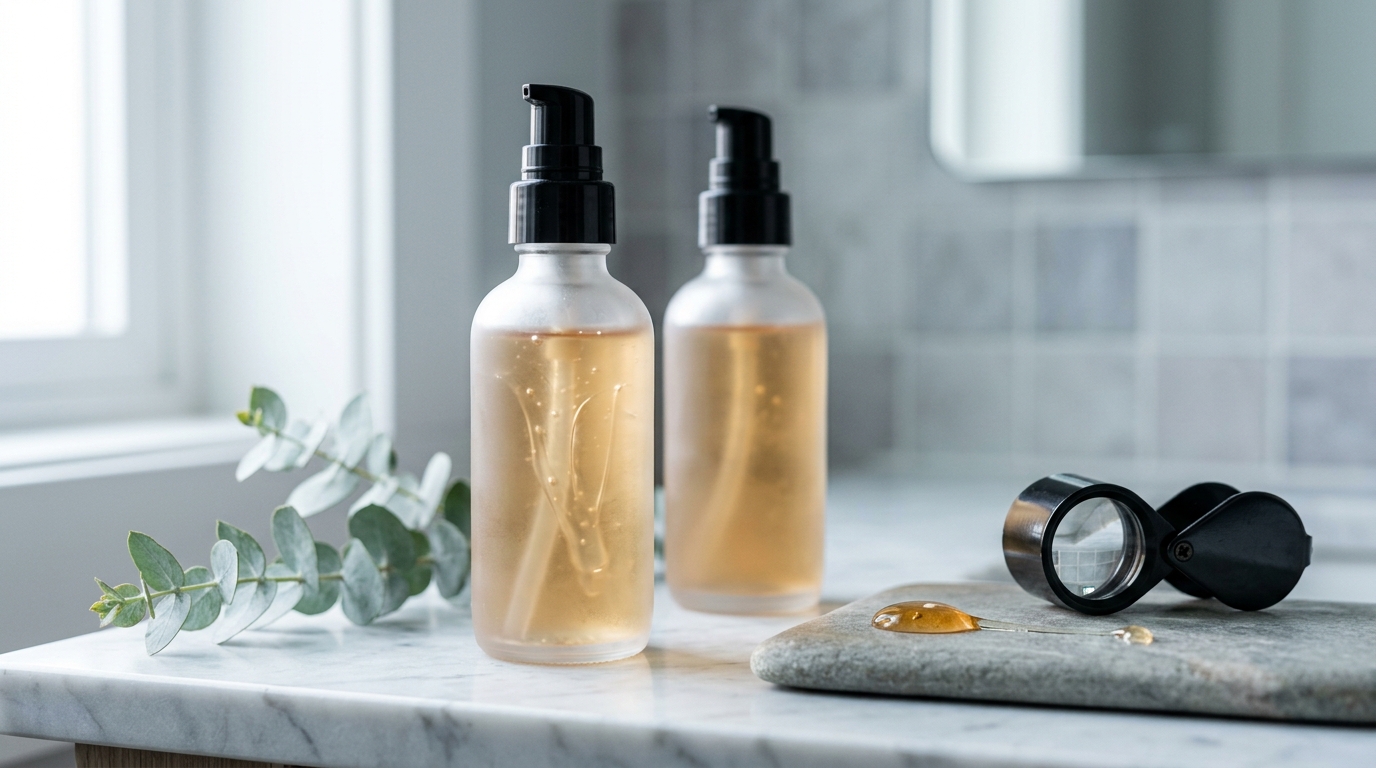
Snail mucin is one of the most counterfeited K-beauty products. Here is where to buy it safely in the US, and which authenticity checks are reliable versus which ones produce false alarms.
Where to Buy Authentic Korean Snail Mucin in the US (and How to Spot a Fake)
Quick Answer
Question: Where is the best place to buy authentic Korean snail mucin products online in the US so you do not accidentally buy a fake?
Answer: Buy from authorized retailers rather than open marketplaces. In the US that means Olive Young US, Soko Glam, or iHerb, all of which source through official brand channels. The risk is not that any particular marketplace is dishonest, it is that open marketplaces mix authorized and unverified sellers under one product listing, so you often cannot tell whose inventory you are actually buying. If you already have a bottle and want to check it, the most reliable physical tell on COSRX packaging is print quality: authentic printing is sharp and clear, while counterfeits typically show blurry font edges.
Why Snail Mucin Specifically
Snail mucin, and COSRX Advanced Snail 96 Mucin Power Essence in particular, is one of the most counterfeited products in Korean skincare. The reason is straightforward: enormous Western demand, a recognizable single hero product, and a price point low enough that buyers do not scrutinize purchases the way they would a $90 serum.
That combination makes it worth a counterfeiter's time and makes buyers less careful. It is exactly the wrong pairing.
The practical consequence is that snail mucin deserves more sourcing care than its price suggests. A $25 product you apply to your face daily for months is worth two minutes of thought about where it came from.
Where to Buy: Authorized vs Unverified Sellers
The single most useful concept here is the difference between an authorized retailer and an unverified seller, and it is not the same distinction as "big site versus small site."
An authorized retailer sources inventory through the brand's official distribution chain. The brand knows they are selling it. There is a traceable path from manufacturer to your door.
An unverified seller is anyone listing the product without that relationship. They might be entirely legitimate, reselling genuine stock they bought at retail. They might be selling expired inventory, grey-market goods, or counterfeits. The problem is that from a product page, you usually cannot tell which, and on marketplaces where many sellers share a single listing, the reviews you are reading may describe a different seller's inventory than the one who will actually ship to you.
The three we recommend
Olive Young US is the US store of Korea's largest health and beauty retailer. It ships within the US and carries COSRX, though it doesn't carry every brand. (Its international site, Olive Young Global, stopped shipping to the US in May 2026.)
Soko Glam is a US-based K-beauty retailer with direct brand relationships and a curated catalog. Smaller selection, but everything in it is vetted, and US-based shipping and returns make it the low-friction option.
iHerb carries a substantial K-beauty selection with reliable authentication and ships widely within the US.
Any of the three removes the seller-identity problem entirely. That is the whole point of buying from them.
On marketplaces generally
We are not going to tell you that any specific marketplace sells fakes, because that is not the useful framing and it is not accurate. Large marketplaces contain both authorized brand storefronts and unverified third-party sellers, sometimes on the same product page.
The useful rule is narrower: if you cannot identify who is shipping the item and whether they are authorized, you are accepting sourcing risk. Sometimes that risk is worth it for the price or availability. Just know you are taking it, rather than assuming a familiar site name means the inventory is verified.
How to Spot a Fake COSRX Snail Mucin
If you already have a bottle, here is what actually distinguishes authentic from counterfeit, ordered from most to least reliable.
Strong signal: print quality on the packaging
Authentic COSRX printing is sharp and clear. Counterfeits typically show blurry font edges.
This is the most reliable single check, and it is reliable for a mundane manufacturing reason: reproducing crisp small-point printing requires equipment and process control that counterfeit operations rarely bother with. Look closely at the smallest text on the box and bottle, ideally with your phone camera zoomed in. Authentic text has clean, defined edges. Counterfeit text tends to look slightly soft, fuzzy, or thickened, as though it were photocopied.
Compare against official product photography on the brand's own site rather than against another marketplace listing, which may itself picture a counterfeit.
Strong signal: texture of the product itself
Authentic snail mucin essence is clear and slightly viscous. Counterfeits may be watery.
The genuine texture has a distinctive slight stringiness and body to it. A counterfeit that runs thin and watery, with none of that viscosity, is a meaningful warning sign. This check has the obvious limitation that it requires opening the product, which usually ends your ability to return it, so use the packaging checks first.
Weak signal on its own: the barcode prefix
You will see advice online that a GS1 barcode beginning with 880 proves Korean authenticity. This is partly true and frequently overstated.
An 880 prefix does indicate Korean registration. But a non-880 prefix is a weak signal on its own and is not proof of a counterfeit, because authentic export stock legitimately carries other prefixes depending on where it was registered and packaged for distribution. Products made for international markets routinely have different codes.
So: 880 present is mildly reassuring. 880 absent means very little by itself. Weigh it alongside the print-quality and texture checks rather than treating it as a verdict. People throw away genuine product over this one, and it is the check most likely to produce a false alarm.
Context-dependent: Korean and MFDS labeling
Another common claim is that missing Korean-language or MFDS regulatory labeling indicates a fake. This is true only in a specific context.
If a bottle is being sold specifically as Korea-domestic stock, then missing Korean and MFDS labeling is a genuine red flag, because domestic Korean product carries it.
But global export packaging is English-forward, and that is completely normal. If you bought from an international retailer and received English-language packaging, nothing is wrong. That is what export stock looks like. Judging export inventory by domestic-stock labeling standards is one of the most common ways people misidentify authentic product as fake.
Putting the checks together
No single check is conclusive, which is why the framing matters. Print quality is your strongest tell. Texture confirms it if you have opened the bottle. Barcode prefix and labeling language are supporting context that can mislead you badly when read alone.
If print quality looks wrong and the texture is watery, you very likely have a counterfeit. If the only thing that looks unusual is a non-880 barcode on an English-language box from an international retailer, you most likely have entirely genuine export stock.
For the full step-by-step version of this process, see our 2-minute checklist for spotting fake COSRX snail mucin. If you want the general method that applies to any Korean brand rather than COSRX specifically, our 5-point check for any brand covers that.
Frequently Asked Questions
Where is the best place to buy authentic Korean snail mucin online in the US?
Buy from an authorized retailer rather than an open marketplace. In the US, Olive Young US, Soko Glam, and iHerb all source through official brand distribution, which removes the question of who is actually shipping your order. The core risk on open marketplaces is not dishonesty but ambiguity: authorized and unverified sellers frequently share a single product listing, so the reviews you read may not describe the inventory you receive.
How do you identify fake COSRX snail mucin?
The most reliable check is print quality on the packaging. Authentic COSRX printing is sharp and clear, while counterfeits typically show blurry or soft font edges, most visible in the smallest text. The second check is texture: authentic snail mucin essence is clear and slightly viscous, whereas counterfeits may be noticeably watery. Use the packaging check first, since the texture check requires opening the product.
Does a barcode starting with 880 prove my snail mucin is authentic?
Not by itself, in either direction. An 880 GS1 prefix indicates Korean registration and is mildly reassuring, but a non-880 prefix is a weak signal alone and does not indicate a counterfeit, because authentic export stock legitimately carries other prefixes depending on the market it was registered and packaged for. Treat the barcode as supporting context alongside stronger checks like print quality and texture, never as a standalone verdict.
My COSRX bottle has no Korean writing on it. Is it fake?
Almost certainly not, if you bought it from an international retailer. Global export packaging is English-forward and that is entirely normal. Missing Korean-language and MFDS labeling only signals a problem when the product is being sold specifically as Korea-domestic stock, which does carry that labeling. Applying domestic-stock expectations to export inventory is one of the most common reasons people wrongly conclude a genuine product is counterfeit.
Is it safe to buy snail mucin from a marketplace seller?
It depends entirely on whether you can identify the seller and confirm they are authorized. Large marketplaces host both official brand storefronts and unverified third-party sellers, sometimes under the same listing. If the seller is an authorized brand storefront, the risk is low. If you cannot tell who is shipping the item, you are accepting sourcing risk you could avoid by buying from a retailer with direct brand relationships.
What should I do if I think I bought a fake?
Stop using it, particularly if the texture or scent differs noticeably from what you expected, since you have no way to know what is actually in an unverified product. Contact the seller or platform for a refund, and document the packaging with clear photos of the print quality, which is the evidence most likely to support a counterfeit claim. Then rebuy from an authorized retailer.
The Bottom Line
Most counterfeit purchases do not come from carelessness. They come from a reasonable assumption that a familiar website means verified inventory, when on open marketplaces the seller behind a listing is often invisible.
Buying from Olive Young US, Soko Glam, or iHerb sidesteps the problem entirely, which is worth far more than any post-purchase inspection. If you already have a bottle, check the print quality first, check the texture if it is open, and be careful not to condemn genuine export stock over a barcode prefix or English-language packaging.
Seoul Sister is an intelligence platform rather than a store. We do not sell products, and we have no commercial stake in which retailer you choose. If you want to check what is actually in a product you own, or verify a specific bottle before you use it, Yuri can walk through it with you, free, right here on this page, no account needed.