Why Does Sunscreen Pill? How to Stop It for Good
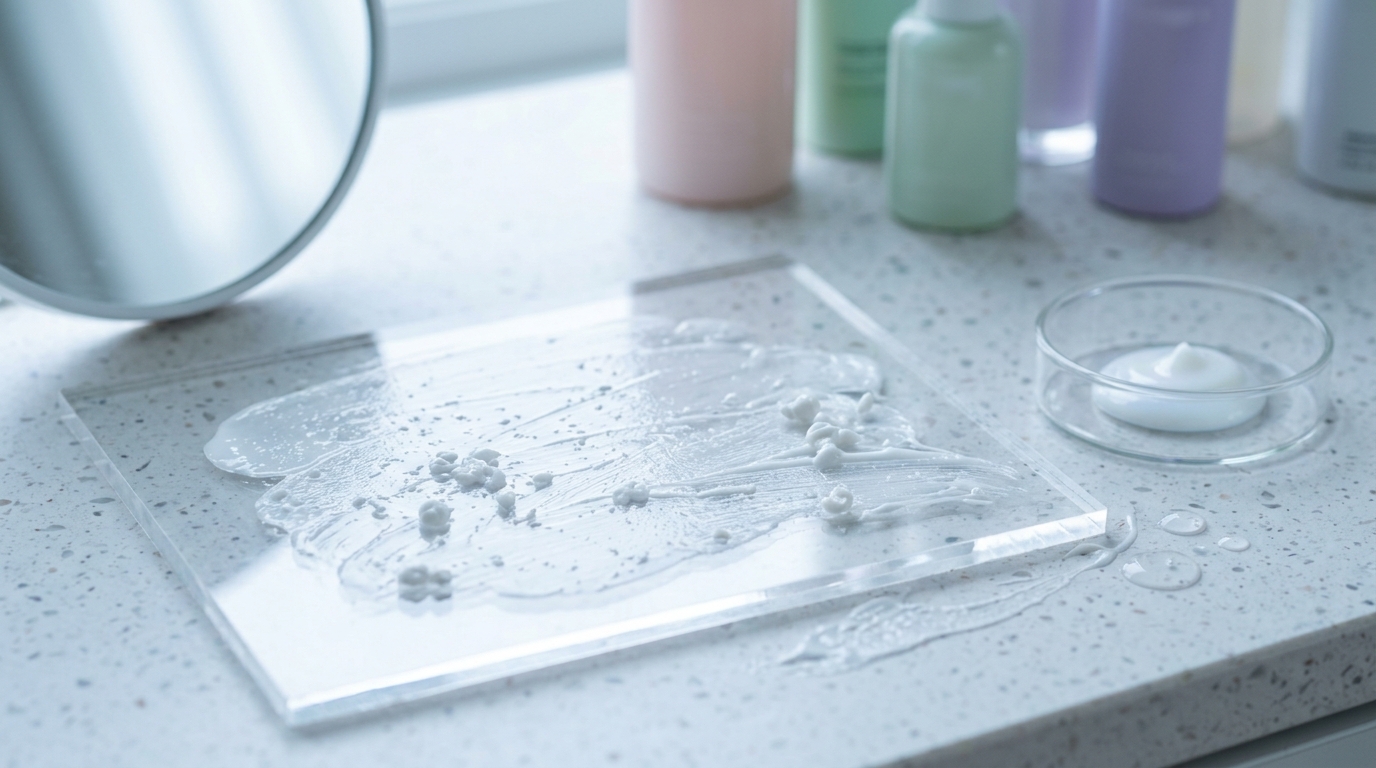
You've layered your toner, serum, and moisturizer perfectly, and then your sunscreen starts rolling off in little balls. Sunscreen pilling is one of the most common frustrations in K-beauty routines, but it's almost always fixable once you understand what's actually causing it.
Why Does Your Sunscreen Pill? (And How to Actually Fix It)
Quick Answer
Question: Why does sunscreen ball up and pill on my face after I apply it over my skincare routine?
Answer: Sunscreen pills when its film-forming agents or UV filters can't bond smoothly to your skin, usually because of ingredient incompatibility with layers underneath, applying too quickly before previous steps absorb, or rubbing the sunscreen in too aggressively. The fix involves adjusting your wait times, checking for silicone conflicts between products, and changing your application technique.
The Situation You're In
You just finished your morning routine. Toner, essence, serum, moisturizer, all patted in beautifully. Your skin looks plump and hydrated. Then you squeeze out your sunscreen, start spreading it across your cheek, and tiny little balls of product start forming under your fingers. Within seconds your face looks like you rubbed an eraser across it.
So you wipe it off, reapply, and it happens again. Now you're running late, your skin is irritated from all the rubbing, and you're seriously considering just skipping SPF altogether. Don't do that. This is fixable, and once you understand why it's happening, you can usually solve it in a day without buying a single new product.
Why This Happens
Pilling isn't a sign that your sunscreen is bad or that your skincare routine is wrong. It's a physical interaction between the formulas you're layering, and it comes down to three main culprits.
Ingredient incompatibility between layers. Most sunscreens contain film-forming polymers like dimethicone, carbomer, or acrylate crosspolymers that create a uniform UV-protective layer on your skin. When these polymers meet certain ingredients in your serums or moisturizers, they can clump instead of spreading. The most common conflict is between silicone-based sunscreens and water-based serums, or vice versa. If your serum is water-based and your sunscreen relies heavily on silicones to spread, the two don't mix well on the surface of your skin and the sunscreen film literally peels up as you rub it.
Not enough absorption time between steps. This is probably the most frequent cause, and it's the easiest to fix. When you apply sunscreen over a moisturizer that hasn't fully absorbed, you're essentially trying to form a film on top of a wet, slippery surface. The sunscreen can't grip your skin properly, so it mixes with the still-wet product underneath and rolls off. Korean skincare routines often involve multiple hydrating layers, which means there's a lot of moisture sitting on your face by the time you reach the SPF step. Each of those layers needs time to sink in.
Aggressive application technique. Sunscreen film-formers are surprisingly fragile during application. If you rub sunscreen back and forth across your face the way you'd apply a moisturizer, you're disrupting the film as it tries to form. The friction literally balls up the polymers before they can set. This is especially true for chemical sunscreens that use organic UV filters like homosalate or octinoxate, which tend to have thinner, more delicate films than mineral formulas.
What Actually Works
Here are six specific fixes, ranked from easiest to most involved. Try them in order before you go out and buy a new sunscreen.
1. Wait two to three minutes after your last skincare step
This alone fixes pilling for most people. After you apply your final moisturizer or serum, set a timer for two or three minutes. Brush your teeth, pick out your outfit, do whatever. When you come back, your skin should feel tacky but not wet. That's the sweet spot for sunscreen application. If your skin still feels slippery, give it another minute. In my experience working with K-beauty formulations, the products with hyaluronic acid and glycerin as primary humectants take the longest to absorb because they pull water to the skin's surface.
2. Pat, don't rub
Apply your sunscreen in gentle pressing and patting motions rather than rubbing it across your face. Put a generous amount on your fingertips, dot it across your forehead, cheeks, nose, and chin, and then press it into your skin with your palms and fingertips. You can do light, short strokes in one direction if you need to spread it, but avoid going back and forth over the same area more than once or twice. Once you've spread it, pat to finish. This gives the film-forming agents a chance to set without being disrupted.
3. Check your silicone compatibility
Pull up the ingredient lists for your moisturizer and your sunscreen. If one product is primarily silicone-based (look for dimethicone, cyclopentasiloxane, or cyclohexasiloxane high on the list) and the other is primarily water-based, that mismatch is likely your problem. The fix is simple: pair water-based with water-based, or silicone-based with silicone-based. You can check ingredient lists for any K-beauty product on Seoul Sister's ingredient encyclopedia to figure out which base your products use.
4. Thin out your morning routine
I know this one hurts. You've built a beautiful multi-step routine and you don't want to cut anything. But your morning routine doesn't need to be as involved as your evening one, because you're about to cover everything with sunscreen anyway. Try moving your heavier serums and treatments to nighttime and keeping your morning to a gentle cleanser, one hydrating toner or essence, a lightweight moisturizer, and sunscreen. The fewer layers sitting between your skin and your SPF, the less chance of pilling. Products like the Supple Preparation Unscented Toner by Klairs work well in streamlined morning routines because they absorb quickly without leaving a heavy residue.
5. Apply sunscreen to slightly damp skin if your formula allows it
Some newer Korean sunscreens, especially the watery, milk-type formulas, actually spread better on skin that's very lightly damp rather than completely dry. If your sunscreen is a fluid or essence-type texture, try misting your face lightly with a toner spray after your moisturizer absorbs, then applying sunscreen immediately. This can help the formula glide on without catching on dry patches or product residue. This won't work for every sunscreen though, so test it on a small area first.
6. Swap your sunscreen formula type
If you've tried everything above and you're still getting pilling, the formula itself might just not be compatible with your routine. Gel-type and essence-type Korean sunscreens tend to pill less than cream-type sunscreens because they have lighter film-forming systems. Look for sunscreens that list water as the first ingredient and avoid heavy zinc oxide or titanium dioxide mineral formulas if pilling is your main concern, since mineral filters sit on top of the skin and are more prone to displacement. You can browse options on Seoul Sister's best sunscreens page to compare formulas.
Frequently Asked Questions
How do I stop my sunscreen from pilling?
The fastest fix is to wait two to three minutes between your last skincare step and sunscreen application, then pat the sunscreen on instead of rubbing it. If that doesn't work, check whether your moisturizer and sunscreen have mismatched bases (one silicone-heavy, one water-heavy) and try pairing similar formulations together.
Does sunscreen pill because of silicone?
Silicone itself doesn't cause pilling, but a mismatch between silicone-based and water-based products in your routine can. When a silicone-heavy sunscreen is applied over a water-based serum that hasn't fully absorbed, the two formulas resist blending and the sunscreen film balls up. Matching your product bases solves this in most cases.
Should I wait between skincare steps before applying sunscreen?
Yes. Give each layer about 30 to 60 seconds to absorb, and then wait a full two to three minutes after your final moisturizer before applying sunscreen. Your skin should feel slightly tacky but not wet or slippery when you apply SPF. Skipping this wait time is the single most common cause of pilling.
Can applying too much sunscreen cause pilling?
It can contribute to pilling, but under-applying is a bigger problem for UV protection. The recommended amount is about a nickel-sized dollop for your face. If you find that amount pills, the issue is more likely technique or product incompatibility than quantity. Try applying in two thinner layers with a 60-second pause between them rather than one thick layer.
Which types of Korean sunscreens are least likely to pill?
Watery, gel, and essence-type sunscreens tend to pill the least because their lighter film-forming systems integrate more easily with skincare layers underneath. Cream-type and mineral sunscreens with high concentrations of zinc oxide or titanium dioxide are more prone to pilling because they sit on the skin's surface rather than absorbing into it.
One aside worth knowing while you are shopping for a replacement: Korean sunscreens sold through US retail are frequently reformulated with FDA-approved filters, and Consumer Reports testing found those US versions test measurably weaker than the Korean-market originals (Beauty of Joseon's SPF 36 came out around SPF 19 here, Round Lab's SPF 46 near SPF 16). Even the Korean formulas tested under their SPF 50+ labels, and the gap is narrowing since the FDA approved bemotrizinol in 2026. It does not change the pilling advice, but it does mean the texture you read about in a review may come from a different formula than the one you receive.
The Bottom Line
Sunscreen pilling feels like a personal betrayal after you've invested time and money into a careful routine, but it's almost never a reason to give up on a product you otherwise love. Most of the time, a simple change in timing or technique is all it takes. Start with the wait time fix tonight so you're ready for tomorrow morning, and work your way down the list only if you need to.
Your SPF step is the single most important thing you do for your skin every day. It protects all the work your serums and treatments are doing overnight. A little pilling is annoying, but it's a solvable problem, and once you crack it, your routine will feel simple.
If you want to dig deeper into any of these ingredients, our ingredient encyclopedia and product database have the research to back up your choices.
Pilling is almost always a conflict between two specific products rather than one bad sunscreen, which makes it hard to diagnose from an article. If you tell Yuri the actual moisturizer, sunscreen, and primer you're layering, she can pinpoint which pair is clashing and what to change, usually without you buying anything new. She's right here on this page, free, no signup.