Do Korean Eye Patches Actually Work? A Realistic Guide to What's Worth Your Money
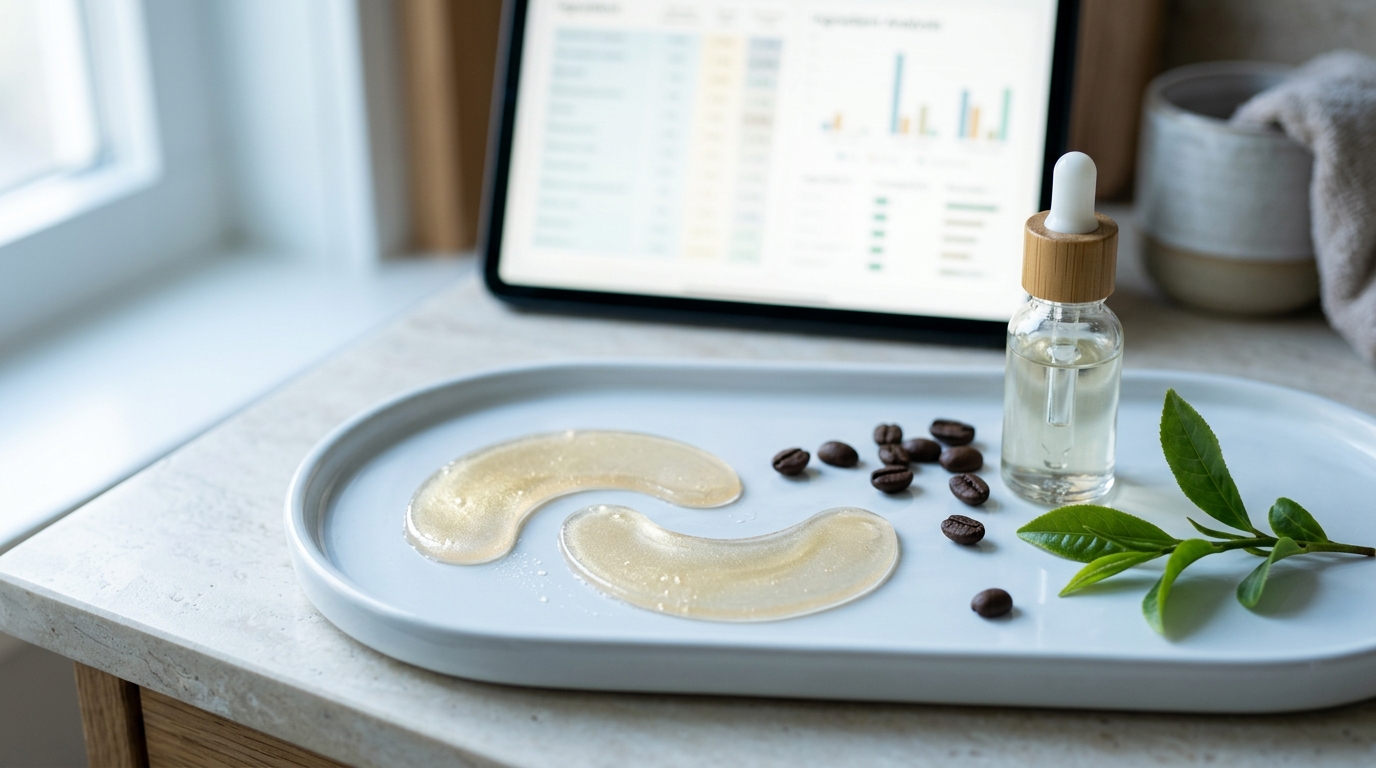
Eye gel patches have become one of K-beauty's most Instagrammable products, but the real question is whether they deliver results beyond a cute selfie. We looked at the ingredients, the science, and the realistic expectations you should have before stocking up.
Do Korean Eye Patches Actually Work? A Realistic Guide to What's Worth Your Money
Quick Answer
Question: Do Korean eye gel patches actually reduce puffiness, dark circles, and fine lines, or are they mostly hype?
Answer: The honest answer is somewhere in between. Korean eye patches with the right active ingredients (niacinamide, peptides, caffeine, adenosine) can genuinely hydrate, depuff, and brighten the under-eye area over time. But they won't fix dark circles caused by your bone structure or genetics, and a single use won't undo a week of bad sleep. The difference between patches that actually deliver results and ones that just feel nice comes down to specific ingredients at effective concentrations. Most people never check this because, well, the label is in Korean and the marketing all sounds the same. Once you know what to look for, you can stop guessing and start spending your money on patches that actually do something measurable for your skin.
The Situation You're Actually In
It's 11:30 PM and you're three pages deep into a TikTok rabbit hole. Someone with poreless, luminous under-eyes is slowly peeling off a pair of shimmering hydrogel patches, and the comments are losing their minds. "Drop the link!" "I NEED these." You pause the video and catch your own reflection in the dark part of the screen, and those stubborn shadows under your eyes stare right back at you.
So you do what anyone would do. You open a new tab and search "best Korean eye patches," and suddenly you're looking at hundreds of options. Half the packaging is in Korean. Prices range from $2 to $35 for products that look almost identical. Reviews are split between people calling them life-changing and people saying they did absolutely nothing. You add something to your cart based mostly on the aesthetic of the packaging and a vague promise of "brightening," and somewhere in the back of your mind you know that's not a great decision-making process.
I want you to try something right now if you have any K-beauty eye patches nearby. Flip the package over and look at the ingredient list. Can you identify even three active ingredients and explain what they're supposed to do for your skin? If you can't, you're in the majority. And that gap between what you're buying and what you actually understand about the product is costing you more than you think.
This isn't about being a smarter shopper in some abstract sense. It's about the fact that you've probably already spent $50 to $100 on under-eye products that didn't work, and the frustration of not knowing whether the product failed or you just picked the wrong one is genuinely exhausting.
Why It's So Hard to Tell What Actually Works
Eye patches occupy this strange space where skincare overlaps with self-care ritual, and that makes them really difficult to judge. The experience of using them feels effective whether the formula is good or not. You put on a cool, gel-soaked patch, you lie down for 20 minutes, and when you peel it off your skin looks temporarily plumper and brighter. That immediate result feels like proof that the product works, but most of that effect is just short-term hydration that fades within a few hours.
Your under-eye skin is some of the thinnest on your entire body, sometimes less than 0.5mm thick. Because it's so thin, it responds almost instantly when you flood it with moisture. A hydrogel patch soaked in humectants like hyaluronic acid or glycerin will plump that area up fast, and that's a real, visible change. But it's temporary in the same way that your lips look fuller right after you apply a heavy balm. Without consistent use and the right supporting ingredients, you're basically renting results for a few hours at a time.
And then there's the expectation problem. A huge percentage of dark circles aren't caused by anything a topical product can address. If your circles come from the natural hollowing of your tear trough, from visible blood vessels beneath thin skin, or from hyperpigmentation that runs in your family, no eye patch on earth is going to eliminate them. That doesn't mean patches are useless for you. It means the goal should be incremental improvement in skin quality, not a complete transformation. When people say "these didn't work," they often mean "these didn't do what I imagined they would," which is a different thing entirely.
The biggest barrier, though, is ingredient transparency. Most popular Korean eye patches list their full INCI ingredients only in Korean, and even when an English translation exists, it's often partial, poorly formatted, or missing concentration details. You end up choosing between products based on marketing language like "intensive brightening" or "premium anti-wrinkle" with no way to verify whether those claims are backed by meaningful amounts of active ingredients. If you're staring at a label you can't read, ask Yuri right here on this page; she's free, needs no signup, and can help you break down what's actually in the formula. That information gap is where most of the waste happens.
There's also a price transparency issue that doesn't get talked about enough. That $28 eye patch set you found on Amazon or a US-based K-beauty retailer? It might retail for the equivalent of $9 in Korea. Markups of 200% or more are common, and because most consumers can't easily price-check against Korean retail sites, they have no idea whether they're paying a fair premium for convenience and shipping or just getting overcharged. Seoul Sister's Price Comparison tracks a product's price across the retailers we track (led by Olive Young, with Soko Glam and iHerb where available) so you can see the Korea-vs-US spread before you buy. When you combine that with the ingredient opacity problem, you're essentially buying blind at inflated prices.
What Actually Works (With Specific Ingredients and Realistic Timelines)
1. Match the right ingredients to your specific under-eye concern.
This is where most people go wrong. They grab whatever eye patch is trending or looks prettiest, without checking whether the formula actually targets their problem. Different under-eye issues need different active ingredients, and using the wrong ones isn't harmful but it is a waste of money and time.
For dark circles caused by hyperpigmentation: Look for niacinamide at 2% or higher. Niacinamide inhibits the transfer of melanin to your skin cells, which gradually reduces the appearance of discoloration. This takes consistent use over 4 to 8 weeks to show visible results. You won't see a difference after one use, and anyone who tells you otherwise is selling something. Arbutin and tranexamic acid are two other ingredients that show up in higher-end Korean eye patches and work through similar brightening pathways.
For fine lines and loss of firmness: Peptides are what you want, specifically signal peptides like acetyl hexapeptide (sometimes called Argireline) or copper peptides. These communicate with your skin cells to encourage collagen production. Adenosine is another ingredient that's extremely common in Korean formulations and has solid clinical data supporting its anti-wrinkle effects. The Korean FDA (MFDS) actually recognizes adenosine as a functional anti-wrinkle ingredient, which means products containing it at approved concentrations have passed regulatory review. Look for it near the top half of the ingredient list, which generally indicates a higher concentration.
For puffiness: Caffeine is the most effective topical option because it temporarily constricts blood vessels and helps reduce fluid retention under the eyes. The effect is real but it lasts a few hours, not all day. Some patches also include centella asiatica extract, which can help calm inflammation that contributes to swelling. If your puffiness is worse in the morning, that's usually fluid pooling overnight and a caffeine-based patch used first thing will give you the most noticeable result.
For general dryness and texture: Hyaluronic acid (in multiple molecular weights if possible), squalane, and ceramides will do the most for basic hydration and barrier repair. If your main issue is that the under-eye area just looks dry and crepe-y, a well-formulated hydrating patch used 2 to 3 times per week can make a noticeable difference within a couple of weeks. This is actually the concern that eye patches address most effectively.
Why we are not handing you a top-five patch list
You came here for names, so here is the honest answer about why this section is a set of ingredients instead.
We checked our catalog for eye patches with enough verified review volume to call any single one a confident pick, and there aren't any that clear the bar we use elsewhere on this site (at least a couple of hundred real reviews on a verified listing). Patches are a fast-moving, heavily white-labelled category where the same hydrogel gets repackaged under a dozen brand names, which is exactly the situation where a "best of" list ages into misinformation within a season.
What we can tell you holds up: the ingredient list is the product. Take the four concern-to-ingredient matches above into whatever patch you are looking at, check that the relevant active sits in the top half of the list, and you will out-perform anyone buying the prettiest packaging.
If you want a longer-lasting version of the same actives, an eye cream is usually the better value per use, and those we can ground. Our roundup of the best Korean eye creams ranks the full category, and three are worth naming here: the Mizon Snail Repair Eye Cream (4.5 stars, roughly 5,800 reviews), the Beauty of Joseon Ginseng Eye Cream (4.5 stars, roughly 4,800 reviews), or the Mary&May Tranexamic Acid + Glutathione Eye Cream (4.5 stars, roughly 3,200 reviews) if pigmentation is your specific concern. A patch is a 20-minute treatment; a cream is on your skin all night. For anything driven by pigment or fine lines, where the fix is measured in weeks, the cream is doing more of the work.
2. Use them consistently, not just when you remember.
A single eye patch session is a nice ritual, but it's not a treatment. Think of it more like exercise. One workout feels good but doesn't change your body. The same principle applies here. For measurable results, you need to use patches with active ingredients at least 2 to 3 times per week for a minimum of 4 weeks. Keep them in your fridge, both because the cold temperature enhances the depuffing effect and because having them visible reminds you to actually use them.
Track what you're using and when. This sounds tedious, but it's the only way to know if a product is working or if you've been using it too sporadically to judge. A note in your phone works fine: the date you opened the product, and a quick line each time you use it. Check the PAO (period after opening) symbol on the package too, so you're not putting degraded ingredients on the thinnest skin on your face. Your skin also changes with your hormonal cycle and with the seasons, so what works beautifully in humid July might feel insufficient in dry January. Having a record helps you spot those patterns instead of blaming the product.
3. Check ingredient lists before you buy, even if they're in Korean.
This is the single most impactful habit you can build as a K-beauty consumer. Before adding any eye patch to your cart, look up the full ingredient list and cross-reference it against the specific actives you need for your concern. If the product listing doesn't include a full ingredient list in a language you can read, that should be a red flag, or at least a reason to pause.
Seoul Sister's Ingredient Encyclopedia covers 8,200+ ingredients with safety ratings, effectiveness by skin type, and comedogenic scores. You can look up any ingredient you find on a label and understand what it actually does. And if the label itself has you stuck, Yuri, right here on this page, can help you check, free and with no account, whether the "brightening" claim on the front of the package is backed by real brightening ingredients inside. You can also compare products side by side to see whether that $30 option actually has a better formula than the $12 one, or if you're just paying for fancier packaging.
4. Layer them into your routine correctly.
Eye patches should go on clean, dry skin before the rest of your skincare. If you apply them on top of a serum or moisturizer, the hydrogel can't adhere properly and the active ingredients have to compete with whatever you've already put on your skin. After removing the patches, pat any remaining essence into the skin (don't wipe it off) and then continue with your regular routine. If you're using a retinol product at night, apply the patches first and wait until the essence absorbs before putting retinol anywhere near your under-eye area, because layering retinol directly over a freshly-patched, extra-permeable area can cause irritation.
If you're adding eye patches into an existing multi-step routine and aren't sure where they fit, start a free chat with Yuri on this page; she can check layering order and ingredient conflicts with you, no account needed.
5. Verify authenticity, especially when buying from third-party sellers.
This one is uncomfortable to talk about but it matters. Counterfeit K-beauty products are a real and growing problem, particularly on marketplace platforms where third-party sellers can list products without rigorous verification. Fake eye patches might contain different ingredients than what's listed, be manufactured under unregulated conditions, or simply be expired stock repackaged with new dates. If you're buying from a seller you don't recognize and the price seems significantly lower than what the brand charges directly, proceed with caution. Seoul Sister's guide to spotting fake Korean skincare walks through the checks worth running before putting anything on your skin.
How to Pick Your Next Eye Patches (A Quick Checklist)
Before your next purchase, run through these five questions:
What's my primary under-eye concern? Pick one. Trying to address dark circles, fine lines, puffiness, and dryness with a single product usually means you're not effectively treating any of them.
Does this product contain at least one proven active for that concern? Check the actual ingredient list, not just the marketing description on the front.
Can I read and understand the full ingredient list? If not, look the ingredients up in Seoul Sister's Ingredient Encyclopedia, or ask Yuri for free on this page, before buying. You wouldn't take medication without reading the label, and skincare deserves the same basic diligence.
Is the price reasonable compared to what this costs in Korea? A moderate markup for international shipping and retail overhead is normal. A 300% markup with no added value is not. Compare prices across retailers before you commit.
Am I buying this because it's well-formulated, or because I saw it on TikTok and the packaging is cute? Be honest with yourself. There's nothing wrong with enjoying pretty packaging, but it shouldn't be the primary reason you're spending money on a skincare product.
The Bottom Line
Korean eye patches aren't a gimmick, but they're also not magic. The ones with effective ingredients at meaningful concentrations, used consistently as part of a thought-out routine, can genuinely improve hydration, brightness, texture, and the appearance of fine lines in the under-eye area. The ones with mostly water, fragrance, and marketing? Those are a $15 to $30 lesson in reading ingredient lists.
The biggest thing standing between you and better results isn't the products themselves. It's the information gap. When you can't read the label, can't verify what's inside, can't compare prices fairly, and can't track whether something is actually working over time, you're making decisions in the dark. Seoul Sister was built to close that gap, whether you need to look up an ingredient, compare prices, or just ask Yuri what eye patches actually make sense for your skin type and budget. Yuri is free to chat with right here on this page, no account needed.
You don't need to become a cosmetic chemist. You just need better tools than guesswork and TikTok comments. Your under-eyes, and your wallet, will thank you.