How Do You Read Korean Skincare Expiration Dates and Batch Codes?
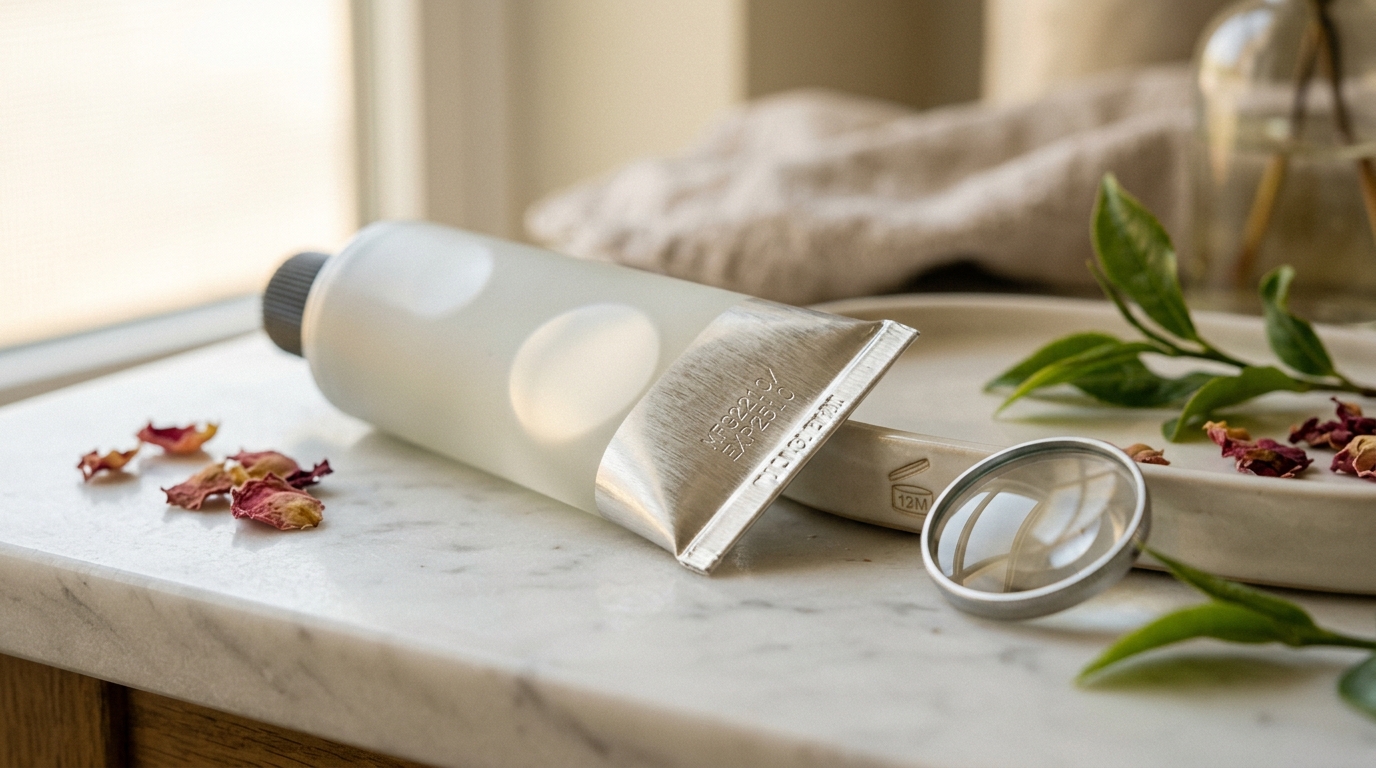
Korean products print a manufacturing date and a use-by date, and the two look almost identical if you can't read Hangul. Here's how to tell them apart, decode the batch code, and figure out if that serum in your drawer is still good.
Quick Answer
Question: How do you read a Korean skincare expiration date and batch code?
Answer: On Korean products, look for two labels: 제조 (jejo) means the manufacturing date, and 까지 (kkaji) means "use by" or expiration. Both are usually printed as YYYY.MM.DD or YYYYMMDD. If you only see a manufacturing date, add the PAO number (the "12M" or "24M" in the little open-jar icon) to figure out when it expires.
The Situation You're In
You've got a Korean toner in your hand, you flip it over, and there are two dates stamped on the bottom in a font the size of a grain of rice. One says 제조 and one says 까지, or maybe there's just a string of numbers and a tiny jar symbol. You have no idea which date matters, so you either panic and toss a perfectly good product, or you keep using something that expired eight months ago and wonder why your skin's acting up.
Here's a thing you can do right now: grab whatever Korean product is closest to you and look at the base or the crimp of the tube. You're hunting for two four-digit-plus number strings, and one of them will have a Korean word in front of it. Keep this post open while you look. By the end you'll know exactly which number to trust.
Why This Happens
Korean skincare labeling works differently from what most of us grew up reading in the US or EU, and that's the whole source of the confusion. Korean regulations require brands to print the manufacturing date (제조일자), and many products list a separate "use by" date (사용기한 or the shorthand 까지). So you're often staring at two dates instead of one, and if you can't read Hangul, they look interchangeable. They are not.
The bigger trap is products that show only a manufacturing date. A lot of people see 제조 2024.03.15 and assume that's the expiration, so they chuck it thinking it's already dead. In reality that's the birthday, not the death date. To find the real expiration you combine it with the PAO, which stands for Period After Opening. That's the little open-jar icon with a number like 12M or 24M inside it, meaning the product is good for 12 or 24 months once you break the seal.
And this matters more than people think. An expired sunscreen won't protect you the way it should, and an oxidized vitamin C or a broken-down active can go from helpful to irritating. It's totally valid to be unsure here. Korean labels weren't designed with English readers in mind, and the print is genuinely tiny.
What Actually Works
Learn the two words that do all the work: 제조 and 까지. 제조 (jejo) is the manufacturing date. 까지 (kkaji) means "until," so it marks the use-by date. If a product shows both, the 까지 date is your hard expiration. If it shows 제조 followed by something like 24개월 (24 months), that's telling you the shelf life from manufacture. Snap a mental picture of those two words, because once you recognize them, most of the mystery disappears.
Use the PAO icon when there's no printed expiration. The open-jar symbol with "12M" or "24M" is universal, and it kicks in the moment you open the product. So if your cleanser was manufactured in January and has a 12M PAO, and you opened it in June, it's good until the following June, not January. This is where people mess up most. The gentle Klairs Supple Preparation Unscented Toner is a good example of a product you'll actually finish well within its window if you're using it as your daily first hydration step. Its formula leans on sodium hyaluronate and centella asiatica, and fragrance-free, low-irritant formulas like this don't have a ton of preservative padding, so respecting the PAO genuinely matters.
Decode the batch code when there's no readable date at all. Some products, especially minis and sets, print only a batch or lot code, which looks like a random cluster of letters and numbers. These aren't standardized across brands, but they usually encode the manufacturing date once you know the brand's system. This is the same skill that helps you spot fakes, and it overlaps with counterfeit detection almost completely, since a batch code that doesn't decode to a real date is a red flag. If you want the full method, my 5-point check for spotting fake Korean skincare walks through it, and there are product-specific versions like the COSRX snail mucin checklist. If you're staring at a code you can't crack, you can ask Yuri right here on this page to help decode that batch code so you know it's legit and still in date.
Watch the products where freshness actually changes performance. Not everything degrades at the same speed. Sunscreens are the ones I'd never gamble on, because expired SPF can quietly stop protecting you. If your daily sunscreen is past its window, replace it rather than hoping. Cream cleansers with real food-based ingredients also turn faster; a formula loaded with pumpkin powder, honey, or similar natural extracts doesn't want to sit around opened for two years. Micellar waters like Bioderma Sensibio H2O and simple milk cleansers are more stable, but the PAO still applies once opened.
Frequently Asked Questions
What does 제조 mean on Korean skincare?
제조 (jejo) means "manufactured" and marks the date the product was made, not when it expires. It's usually written as 제조 followed by a date like 2025.04.10. If that's the only date on the package, you find the actual expiration by adding the PAO number (the months inside the open-jar icon) from the day you opened it.
What does 까지 mean on a Korean skincare label?
까지 (kkaji) means "until" and marks the use-by or expiration date. When a Korean product lists both 제조 and 까지, the 까지 date is your true hard deadline for using it. If you see a date followed by 까지, that's the one to trust over the manufacturing date.
How long does unopened Korean skincare last?
Unopened Korean skincare typically lasts about 30 to 36 months from the manufacturing date, though this varies by formula. Once you open it, the PAO icon takes over, so a 12M PAO means you should finish it within 12 months of opening regardless of how long it sat sealed. Sunscreens and products with fresh natural extracts are the ones I'd use fastest.
Is it bad to use expired Korean skincare?
Using expired Korean skincare ranges from pointless to genuinely irritating depending on the product. Expired sunscreen may not protect you properly, and oxidized actives like vitamin C can lose effectiveness or cause irritation. Water-based toners and micellar waters degrade more slowly, but an off smell, color change, or separation is your sign to toss it no matter what the date says.
How do I read a Korean skincare batch code?
Korean skincare batch codes are brand-specific clusters of letters and numbers that usually encode the manufacturing date, but there's no single universal format. If the code won't decode into a plausible recent date, that's a counterfeit warning sign. Seoul Sister can help decode a specific brand's batch code if you're stuck, since verifying the date is part of confirming a product is authentic.
The Bottom Line
Once you know 제조 is the birthday and 까지 is the deadline, most Korean labels stop being intimidating. The real skill is remembering that a manufacturing date alone isn't an expiration, so you pair it with the PAO icon from the day you open the product. That single habit will save you from tossing good products and from clinging to dead ones.
If you're holding a product and genuinely can't tell whether it's still good, or you want to double-check a batch code before you use something, start a free chat with Yuri right here on this page, no account needed. She can help you decode the date and flag whether it lines up with an authentic product, which is the fastest way to stop guessing.