Same Brand, Different Formula: Why That "Similar" K-Beauty Product Just Wrecked Your Skin
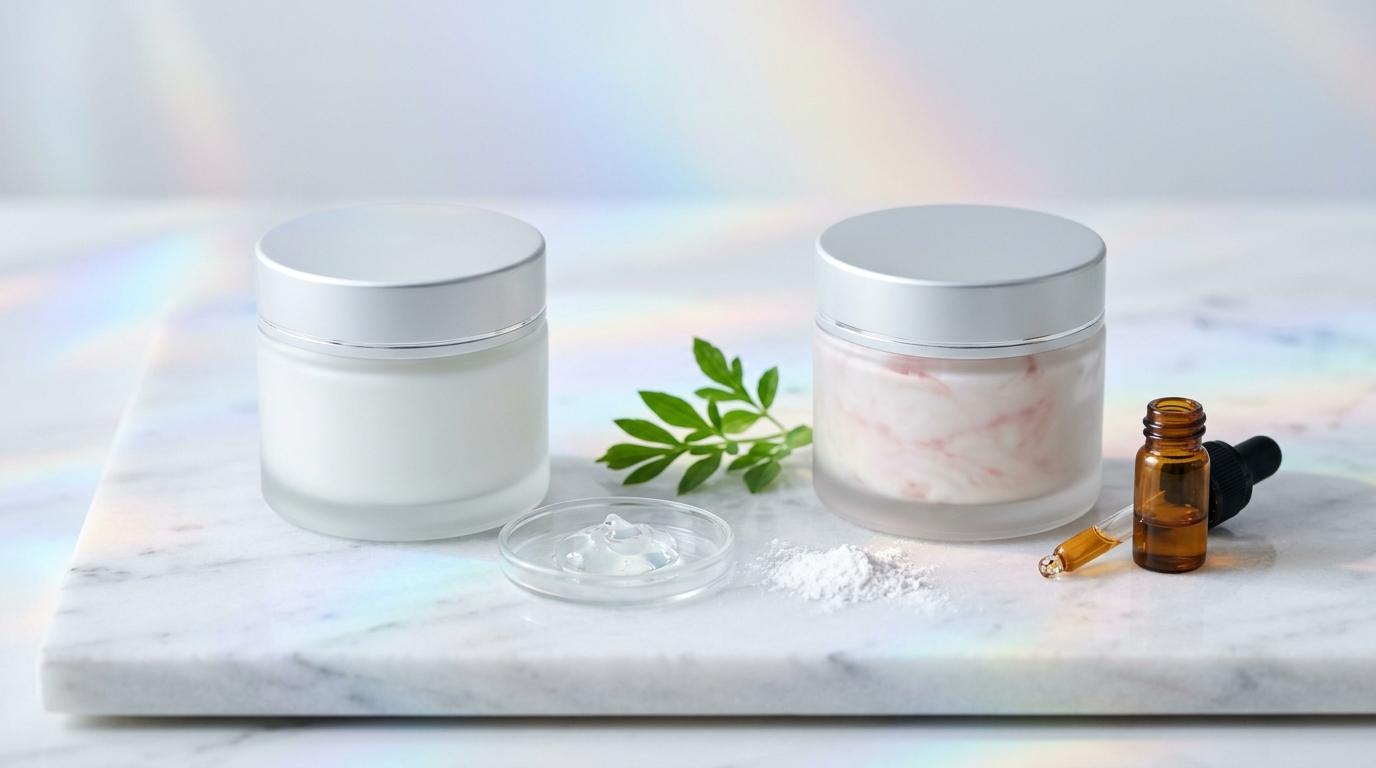
You found a K-beauty moisturizer you love, so you try another version from the same brand. Then your skin freaks out. Here's what's actually going on at the ingredient level and how to avoid it next time.
Same Brand, Different Formula: Why That "Similar" K-Beauty Product Just Wrecked Your Skin
Quick Answer
Question: Why does your skin freak out when you switch to a K-beauty product that looks almost identical to one you already love from the same brand?
Answer: Two products can share a hero ingredient, a brand name, and even similar packaging, but the rest of the formulation is often completely different. The emulsifiers, preservatives, botanical extracts, pH levels, and texture agents buried in the middle and bottom of the ingredient list are what actually determine how a product interacts with your skin. Just one unfamiliar ingredient or a shifted concentration can trigger breakouts, stinging, or redness. The only way to protect yourself is to compare full ingredient lists before making the swap, not after your skin is already angry.
You've Probably Already Lived This
There's a specific kind of betrayal that only skincare people understand. You find a Korean moisturizer that genuinely works. Your skin is hydrated, your texture is smooth, and for once you feel like you've cracked the code. Then you notice the same brand has another moisturizer, maybe a newer version or a different line, with the same star ingredient splashed across the front. It's a little cheaper, or the packaging is cuter, or someone on TikTok swore by it. You figure it's basically the same product with a different label. So you buy it, swap it in, and don't think twice.
Three days later, tiny bumps appear along your chin. Or your cheeks feel tight and hot in a way they haven't in months. You stare at the new jar, genuinely confused, because everything about it seemed right. Same brand. Same key ingredient. Similar name. And yet your skin is reacting like you just smeared hot sauce on it.
If this has happened to you, you're not alone, and your skin isn't overreacting. There's a concrete reason this keeps catching people off guard, and once you understand it, you'll never make the same mistake again.
The Ingredient Iceberg Problem
Think of a K-beauty product like an iceberg. The hero ingredient, whether that's centella asiatica, panthenol, or hyaluronic acid, is the visible tip above the waterline. It's what gets printed in big letters on the packaging and talked about in reviews. But underneath that single ingredient sit 20 to 40 other compounds doing the real structural work of the formula, and that's where the trouble hides.
Two moisturizers from the same brand can both lead with centella and still disagree on almost everything else. One might use a fermented yeast filtrate as a secondary active while the other relies on a botanical blend of mugwort and bamboo extract. The emulsifier holding the cream together could be different. The preservative system might swap out one compound for another. Even the thickening agents can change, which affects how deeply the product penetrates and how long it sits on your skin's surface.
These differences tend to cluster in the middle and lower portions of the ingredient list, which is exactly the part most of us glaze over. We see the hero ingredient near the top, mentally check the box, and move on. But your skin doesn't care about marketing hierarchies. If it's sensitive to a specific plant extract or a particular type of fatty alcohol buried at position 15 on the list, it will react regardless of how far down that ingredient appears.
There's a texture dimension to this too. A lightweight gel-cream and a rich barrier cream deliver their shared ingredients in fundamentally different ways. A heavier occlusive formula can trap irritants against your skin for hours, while a thinner water-based version might contain a higher ratio of humectants that actually pull moisture out of your skin in dry or air-conditioned environments. The vehicle matters as much as the cargo, and "similar" products can use very different vehicles.
And then there's the issue almost nobody talks about: silent reformulations. Korean beauty brands update their formulas more frequently than most Western brands, sometimes without changing the packaging in any obvious way. The product you repurchased might not even be the same product you originally fell in love with. Some ingredient tracking tools now send alerts when a product's formula shifts, which is worth looking into if you've been burned by a stealth reformulation.
What to Actually Do About It
1. Compare full ingredient lists before you commit, not after your skin complains.
I know this sounds like the skincare equivalent of "just read the terms and conditions," but it genuinely matters. Pull up both products and look at them side by side. You're not just confirming the hero ingredient is present. You're scanning for what's different, especially in the first 10 to 15 ingredients where concentrations are highest.
Look for red flags specific to your skin history. If you've reacted to products containing certain essential oils before, check for those. If alcohol denat. Has caused dryness in the past, see if it's crept into the new formula. The problem is that ingredient lists for Korean products are often in Korean, and even when they're translated, the names can be baffling. Seoul Sister's ingredient encyclopedia covers over 8,200 ingredients with plain-English explanations, so you can actually understand what you're looking at instead of just hoping for the best.
2. Build a personal "no-go" ingredient list and keep it somewhere accessible.
This is one of the most useful things you can do for your skin over time, and almost nobody bothers. Every time a product irritates you, compare its ingredient list against products that work well for you. The ingredients that show up only in the irritating products are your suspects. After two or three reactions, patterns start to emerge.
Maybe you'll discover that anything containing a specific fermented extract breaks you out. Or that your skin gets red whenever a formula includes a certain type of fragrance compound. These personal triggers are incredibly individual, which is why generic "best products for sensitive skin" lists are only marginally helpful. Your skin has its own opinions, and keeping a record of them saves you money and misery.
Seoul Sister's AI advisor can actually cross-reference your known sensitivities against any product in their database of 5,800+ Korean skincare products. You tell it what your skin doesn't tolerate, and it flags conflicts automatically before you buy. I wish I'd had something like this during my early K-beauty years when I was basically running uncontrolled experiments on my own face.
3. Patch test every new product, even if it's from a brand you trust completely.
Brand loyalty is great for emotional comfort but useless as a skin safety strategy. Your skin doesn't have brand preferences. It responds to specific chemical compounds, and those compounds change from product to product within the same brand line.
The patch test protocol that actually works: apply a small amount behind your ear or on your inner forearm for two to three days. If nothing happens, move to a small area of your jawline for another two to three days. Only then introduce it to your full face. Yes, this takes about a week. But a week of patience beats two weeks of damage control with a compromised skin barrier.
4. Factor in your skin's current state, not just the product itself.
Your skin's tolerance isn't static. Hormonal fluctuations throughout your menstrual cycle can make your skin more reactive during certain weeks. Seasonal shifts change your skin's moisture levels and barrier integrity. Even stress and sleep deprivation lower your skin's threshold for irritation.
A product that your skin handles fine in humid July might cause stinging in dry January because your barrier is already compromised from cold air and indoor heating. This is why some people have products that "randomly" stop working. It's not random. The context changed.
The takeaway is not that you need a tool for this. It is that a product which "stopped working" may be the same product meeting a different version of your skin: a drier month, a hotter one, a different point in your cycle. Before you conclude a formula changed, check whether the conditions did.
5. When something goes wrong, document what happened and when.
This is boring advice and I'm giving it to you anyway because it works. Note the product name, when you started using it, what symptoms appeared, and how long they took to show up. Immediate stinging (within minutes) usually points to a direct irritant like fragrance, alcohol, or a high-pH formula. Breakouts that emerge over several days are more likely a comedogenic response to oils, silicones, or heavy emollients. Delayed redness and flaking over a week or two might indicate a sensitivity to an active ingredient at a concentration your skin can't handle.
Knowing the type of reaction narrows down the type of ingredient causing it, which makes your detective work much faster next time.
The Bigger Picture
K-beauty is incredible for offering variety and innovation, but that variety comes with a real tradeoff: more products means more opportunities to accidentally introduce something your skin hates. The brands aren't doing anything wrong by creating different formulations within the same line. They're trying to serve different skin types and concerns. But the packaging and marketing often make these products look interchangeable when they absolutely aren't.
The fix isn't to stop trying new products. That would defeat the whole point. The fix is to get better at reading what's actually inside them before they touch your face. The right tools can take a lot of the guesswork out of switching products safely, from ingredient databases to AI-powered conflict detection to reformulation tracking.
Your skin isn't being difficult when it reacts to a "similar" product. It's being precise. And once you start being equally precise about what you put on it, those unpleasant surprises become a lot rarer.
Frequently Asked Questions
Can two products from the same K-beauty brand have completely different ingredient lists?
Absolutely. Brands design each product line with a distinct formulation strategy. Two moisturizers from the same brand might share only three or four ingredients out of 30+. The brand name and hero ingredient create an illusion of similarity that falls apart when you actually compare the full lists.
How do I know which specific ingredient caused my reaction?
Cross-reference the ingredient list of the product that irritated you against products your skin tolerates well. Ingredients that appear only in the irritating product are your primary suspects. Seoul Sister's AI advisor can speed this up by automatically comparing formulations and flagging potential culprits based on your skin profile.
Is it possible that my skin just needs time to adjust to a new product?
Sometimes, yes. A mild adjustment period of a few days can happen when you introduce certain actives like niacinamide at higher concentrations. But persistent stinging, spreading breakouts, or increasing redness beyond the first two to three days is your skin telling you something is wrong, not adjusting. Don't push through genuine irritation hoping it'll resolve itself.
Should I avoid buying K-beauty products that I can't read the labels for?
You don't have to avoid them, but you do need a way to understand what's in them. Ingredient databases that translate and catalog Korean skincare products make a Korean-only label much less of a dealbreaker. Just make sure you look up the full ingredient list before purchasing, especially if you have known sensitivities.
Does the order of ingredients on the list actually matter?
Yes, significantly. Ingredients are listed in descending order of concentration, so the first five to ten ingredients make up the bulk of the formula. An ingredient listed near the top at position 3 is present in much higher amounts than the same ingredient at position 25. This means a shared hero ingredient can be at very different concentrations in two "similar" products, which affects both efficacy and irritation potential.
The Bottom Line
A brand name is not a formula. Two products from the same line, in near-identical packaging, with the same hero ingredient on the front, can behave completely differently on your face, because the thing that determines how a product treats your skin is the full ingredient list and the order it is in, not the logo.
So when a "similar" product from a brand you trust wrecks your skin, that is not your skin being unpredictable. It is a different formula doing exactly what its formula does. Check the label before you assume a brand is safe for you, and check it again when a product you have used for years suddenly behaves differently, because quiet reformulations happen more often than brands announce them.
If you have two bottles in front of you and cannot tell what actually changed between them, that is a good use of a second opinion. Read the ingredient list into Yuri right here on this page, free and no account needed, and she will tell you which differences matter for your skin specifically and which are cosmetic. Every ingredient she mentions has a full breakdown on our ingredient pages if you want to go deeper afterward.