Best Milky Toners for a Sensitive, Dehydrated Skin Barrier
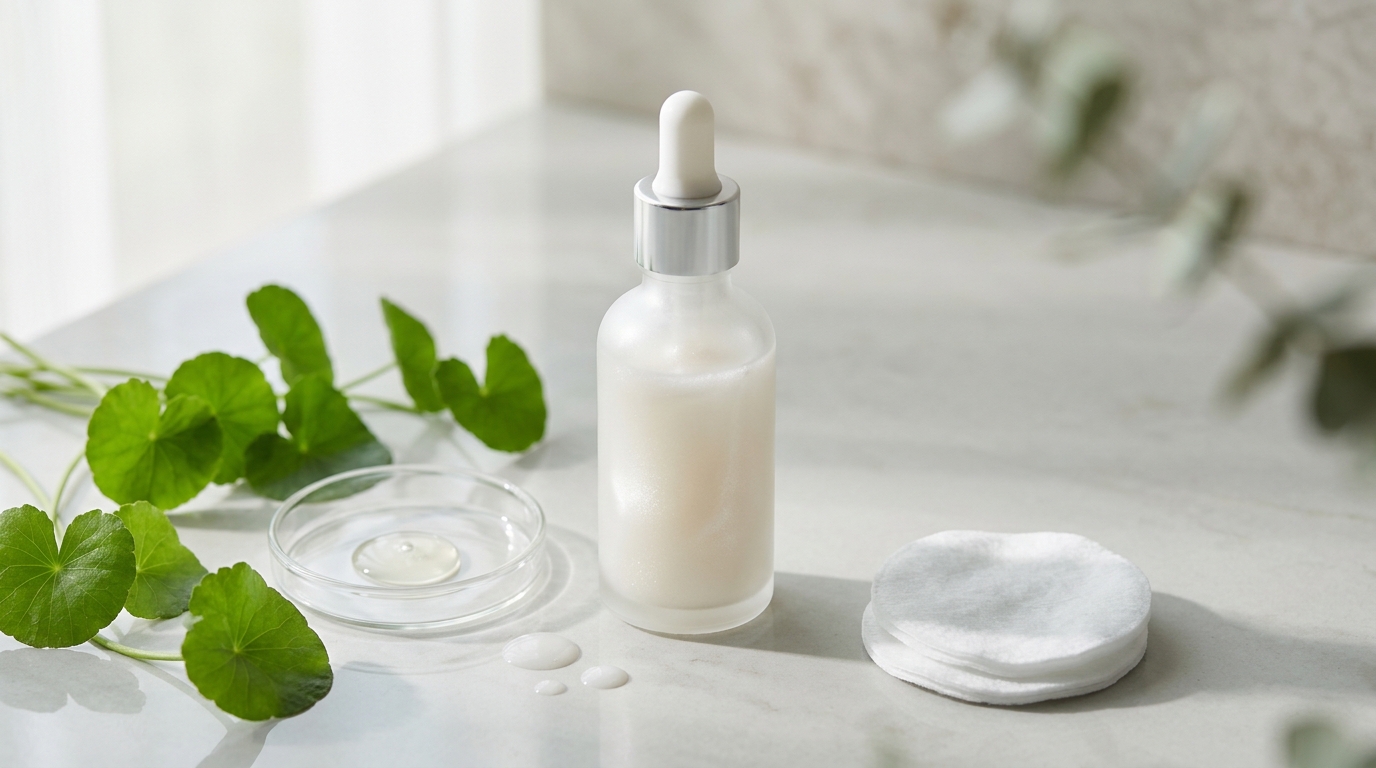
Milky toners promise hydration for sensitive skin, but half of them are loaded with stuff your compromised barrier hates. Here's how to pick one that actually calms instead of stings, and the ingredients worth checking for before you buy.
Quick Answer
What's the best milky toner for a dry, dehydrated, easily irritated skin barrier? The one with the shortest, calmest ingredient list, think glycerin, centella asiatica, panthenol, and ceramide, with no fragrance, no drying alcohol, and no exfoliating acids sneaking in. A milky toner should feel like a soft hydration layer, not a treatment step.
The Situation You're In
Your skin isn't fussy for no reason, it's reacting because the barrier is genuinely compromised, and that's a fixable problem, not a personality trait.
You've probably got a bathroom shelf that tells a story: three or four toners you bought because someone on TikTok said they were "so hydrating," and every single one either stung on application, left your face tight, or gave you tiny bumps you swear weren't there before. So now you're standing there squinting at a milky toner wondering if this is the one that finally works, or just another $28 lesson in what your skin hates.
The frustrating part is that milky toners should be the easy category. They're marketed as the gentle, cushiony, hydrating option, the "even sensitive skin can use this!" step. But a lot of them are quietly loaded with fragrance, essential oils, or a low-key acid that no barrier in recovery should be dealing with. The label says "milky and soothing." The ingredient list says otherwise.
Why Milky Toners Betray Sensitive Skin
Here's what's really going on. "Milky toner" isn't a formula, it's a texture. It just means the liquid is opaque and slightly creamy instead of watery. Brands can put almost anything inside that texture, which is why two toners that look identical in the bottle can behave completely differently on a reactive face.
The three usual culprits when a milky toner stings or bumps you up:
- Fragrance and essential oils. These are the number-one trigger for a compromised barrier. A lot of "milky" formulas lean floral or "clean-scented" because it sells, and citrus/lavender/geranium oils are common irritants for skin that's already inflamed.
- Sneaky exfoliating acids. Some milky toners double as gentle exfoliating toners, meaning salicylic acid or an AHA is in there at a low dose. On healthy skin that's fine. On a wrecked barrier, it's like scrubbing a scrape.
- Drying alcohol. Ingredients like Alcohol Denat. Or SD Alcohol near the top of the list evaporate fast and pull water out of the skin, the exact opposite of what a milky toner is supposed to do. (Note: fatty alcohols like cetyl and cetearyl alcohol are emollients, not the drying kind, those are fine.)
The other issue is that dehydrated skin and dry skin aren't the same thing, and a toner that fixes one can worsen the other. Dry skin lacks oil; dehydrated skin lacks water. If your skin is both, plus barrier-damaged, you need a toner that adds water-binding humectants AND supports the lipid barrier, without any actives fighting for attention. If you're not sure your barrier is actually damaged versus just having a bad week, these are the real signs to look for.
What Actually Works
1. Read the first five ingredients before you fall in love
Whatever milky toner you're eyeing, flip it over. The first five ingredients make up the bulk of the formula. You want to see water, then humectants and soothers, glycerin, hyaluronic acid, panthenol, betaine, or centella asiatica extract, up near the top. If fragrance/parfum or an acid is sitting in that top cluster, put it back.
Yeah, K-beauty labels are genuinely impossible when you can't read Korean, and half the "milky toner" listings online don't even show the full INCI. This is exactly the kind of thing you can look up on Seoul Sister's ingredient encyclopedia, check the actual ingredient, not the marketing word.
2. Skip the toner entirely and use a barrier ampoule if you're mid-flare
Real talk: if your skin is actively stinging and flaking right now, you might not want another new liquid step at all. Sometimes the move is fewer steps, not more. A calming ampoule pressed into damp skin can do the hydrating-and-soothing job a milky toner claims to do, with a formula built specifically for reactive skin.
The Pine Calming Cica Ampoule by Round Lab is one I'd reach for here, it's built around pine and cica (centella asiatica) extracts to calm irritation and support the barrier, and it's aimed squarely at sensitive, reactive skin. Cica is one of the most reliable soothing actives out there when your face is angry.
3. Lock everything in with a ceramide-and-centella cream
A milky toner alone won't fix a dehydrated, barrier-damaged face, it's the water layer, not the seal. Whatever hydration you add needs a cream on top with barrier lipids or it evaporates off.
The Madeca Cream Time Reverse by Centellian24 is a solid pick for this because its verified list actually backs up the claims: it's got niacinamide (barrier support and helps calm redness), glycerin high up, centella asiatica extract, soluble collagen, and peptides. Centella-plus-niacinamide is a genuinely smart combo for skin that's both irritated and dehydrated, one soothes, the other rebuilds. You can browse more options on the moisturizers best-of page if that one's not your texture.
4. Introduce ONE new thing at a time
This is the boring advice that actually saves your face. When your barrier is fragile, adding a milky toner + a new essence + a new cream all in the same week means that when something reacts, you have no idea which one did it. Add the toner. Give it a full week. Then add the next thing.
If you want an anti-aging active back in the mix eventually, a cica-buffered or encapsulated format is the gentlest way in: look for a retinol ampoule that pairs the active with centella rather than a bare high-percentage one. Only bring that in after your barrier is calm and boring again. Not during a flare.
Key Takeaways
- "Milky toner" is a texture, not a formula, the same creamy look can hide fragrance, acids, or drying alcohol. Always check the actual list.
- For a compromised barrier, you want glycerin, panthenol, centella asiatica, and ceramide near the top; no parfum, no AHA/BHA, no Alcohol Denat.
- Dry ≠ dehydrated. If you're both, you need humectants for water AND lipids for the seal.
- Mid-flare? Consider a calming cica ampoule instead of stacking another new step.
- Always seal a water-based step with a barrier cream, and add one product at a time.
Frequently Asked Questions
Are milky toners good for a damaged skin barrier?
They can be, if the formula is genuinely gentle, mostly humectants and soothers with no fragrance, acids, or drying alcohol. The texture isn't the issue; the ingredient list is. A milky toner built around glycerin, panthenol, and centella is great for a fragile barrier. One built around a "clean scent" and a low-dose acid is not.
What's the difference between a milky toner and a regular toner?
Just texture and function. Regular (watery) toners historically balanced pH or prepped skin; milky toners are opaque, slightly creamy, and lean toward hydration. Modern K-beauty toners rarely strip skin the way old-school astringent toners did, but always confirm by reading the list rather than trusting the category name.
Can a milky toner cause breakouts?
Yes, usually from fragrance, essential oils, or heavier occlusive ingredients that don't agree with your skin, or from adding it alongside three other new products so you can't tell what reacted. Patch test on your jaw for a few days and introduce it solo before you blame the toner outright.
Do I still need a moisturizer if I use a milky toner?
Almost always, yes. A milky toner adds a hydration layer but rarely has enough barrier lipids to seal water in on its own. Skipping the cream on dehydrated, barrier-damaged skin means the water you just added evaporates off. Follow with a ceramide or centella cream.
Should I use a milky toner morning and night?
If it's a simple hydrating one with no actives, morning and night is fine. Just remember your morning routine still needs SPF on top, and at night the toner should sit under your treatment and cream steps, not replace them.
The Bottom Line
Your skin isn't "easily offended" for no reason, it's telling you the barrier needs boring, consistent, low-drama hydration, and most milky toners that stung you were just wearing a gentle costume over an irritating formula. Pick one where the first five ingredients are humectants and soothers, skip anything with fragrance or a sneaky acid while you're recovering, and always seal it with a barrier cream.
If you want to sanity-check a specific toner's ingredients before you buy, the free ingredient encyclopedia and product database are the fastest way to see what's really in it, and if you're not sure which one fits your skin type specifically, you can ask the AI advisor right here on this page and it'll walk through your actual situation with you.