Late 20s Skin Spiral? Your Barrier Is Probably Wrecked
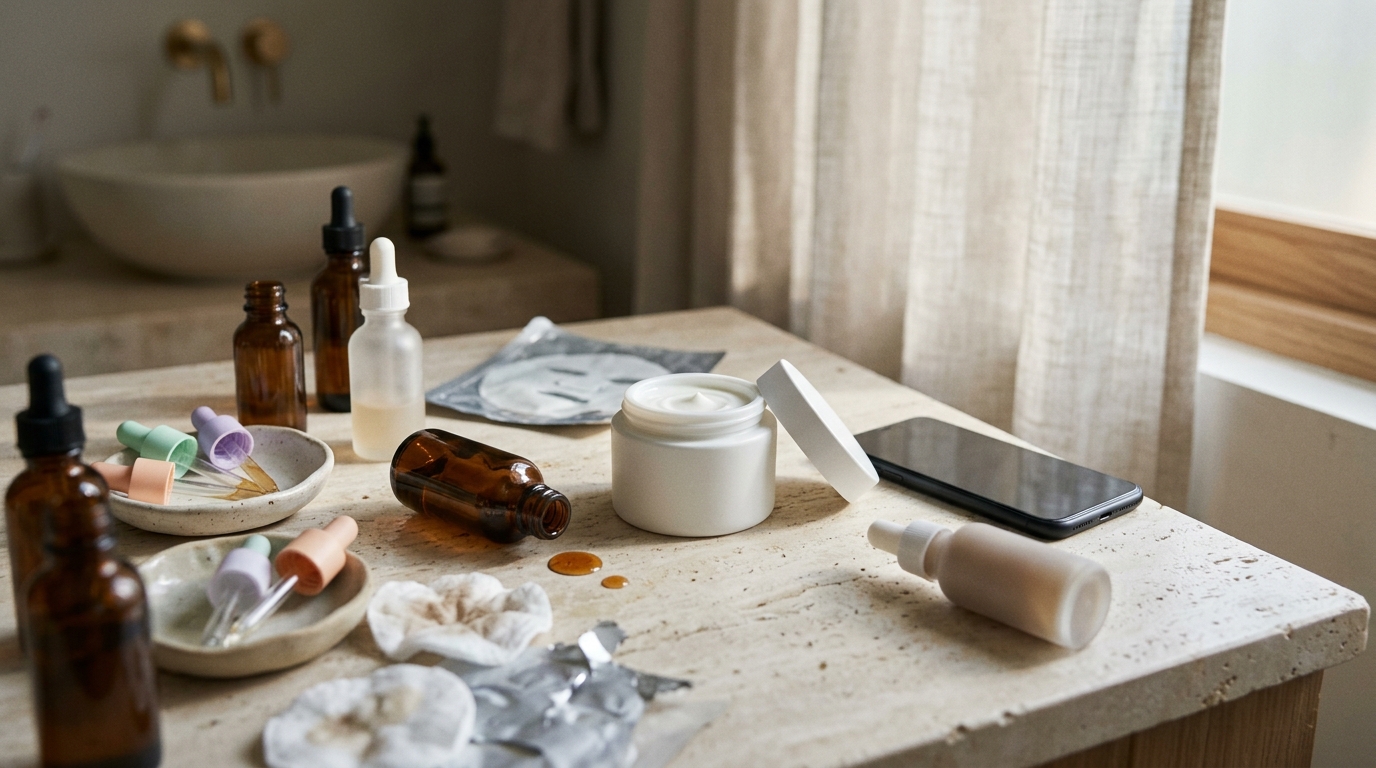
That moment when the algorithm starts serving you retinol ads and "anti-aging at 27" content and suddenly your skin is worse than ever? Yeah, let's talk about what's really going on, because it's probably not what TikTok told you.
Quick Answer: Why Is My Skin Freaking Out in My Late 20s?
Your skin probably isn't "aging", your barrier is most likely compromised from overcorrecting for problems you were told you'd have. The algorithm serves you anti-aging content the second you turn 25, you panic-add actives, and your skin retaliates. The fix isn't more products. It's fewer, smarter ones that repair what you've stripped away.
The Situation You're In
You're 26, 27, maybe 28. One day your skin was... Fine. Not perfect, but manageable. Then the algorithm decided you needed to hear about collagen loss and fine lines and "prevention" routines. So you added a retinoid. Then a vitamin C serum. Then an exfoliating toner because someone on TikTok said their texture disappeared overnight.
Now your skin is red. Or flaky. Or breaking out in places it never did before. Or all three, rotating on some kind of chaotic schedule. You've spent more money on skincare in the last six months than in the previous five years combined, and things are objectively worse.
And the spiral part? You can't tell if this is just your skin "purging," or if you actually broke something, or if this is genuinely what aging looks like and you just need to push through. So you keep scrolling, keep buying, keep layering, and keep getting cooked.
Ugh, I know. Wasting money on products that break you out is the worst feeling. But you're not broken, and this isn't mysterious. Here's what's actually happening.
Why This Happens (And It's Not Aging)
The Algorithm-to-Panic Pipeline Is Real
Here's what nobody talks about: the content you consume literally shapes your skincare routine, which shapes your skin outcomes. When you turn ~25, platforms start categorizing you differently. Anti-aging ads. "Signs of aging you're ignoring" content. Dermatologist TikToks about collagen decline starting at 25 (which, sure, technically, but the way it's framed makes it sound like your face is melting).
So you react. You add actives, retinoids, AHAs, BHAs, vitamin C, often all at once, because every piece of content makes its product sound urgent. And the thing is, most of these ingredients are genuinely effective. The problem isn't the ingredients. The problem is introducing multiple barrier-disrupting actives simultaneously without giving your skin's protective layer any support.
What "Barrier Damage" Actually Means
Your skin barrier is basically a wall of ceramides, fatty acids, and cholesterol that keeps moisture in and irritants out. When you stack actives, especially exfoliants and retinoids, without adequate hydration and barrier support, you thin that wall. Moisture escapes. Irritants get in. Your skin overproduces oil to compensate (hello, new breakouts), gets inflamed (hello, redness), and can't hold onto hydration (hello, flaking).
This is why your skin "suddenly changed." It didn't age overnight. You accidentally dismantled its defense system while trying to prevent problems you mostly didn't have yet.
The Cruel Irony
Here's what makes the spiral so vicious: barrier damage looks like the problems you were trying to prevent. Dehydrated skin shows fine lines more prominently. Inflammation causes uneven texture and tone. So you see "signs of aging," add more actives, and make everything worse. From what I've seen, this cycle accounts for the vast majority of late-20s skin freakouts that show up in skincare communities.
What Actually Works: Repairing the Damage
The fix is counterintuitive if you've been living in active-ingredient land. You need to strip your routine back and focus on repair before reintroducing anything aggressive. Here's what that looks like in practice.
1. Switch to a Cleanser That Doesn't Strip
If you're using a foaming cleanser, especially one that leaves your skin feeling "squeaky clean", that's already working against you. A compromised barrier can't handle harsh surfactants.
The Etude SoonJung pH 6.5 Whip Cleanser is kind of perfect for this phase. It's a gentle low-pH foam, so it cleans without the harsh surfactants that strip a compromised barrier, and its panthenol and madecassoside content means it's actively soothing your skin while you cleanse. The low pH stays close to your skin's natural acid mantle, so it's not disrupting anything just to get clean. If you wear heavier makeup, do an oil or balm cleanse first.
If you want another option in the same gentle lane, the Illiyoon Ceramide Ato Foam Cleanser (about $9.50 at Olive Young, 4.6 stars across roughly 5,800 reviews) is a solid alternative. It's built around ceramides, the same barrier lipids you're trying to rebuild, so your cleanse step is working with the repair phase instead of against it. You can browse more options on the best cleansers page if neither of these clicks for you.
2. Hydrate Before You Moisturize (Yes, They're Different)
This is where a lot of people go wrong in the repair phase. They slap on a heavy cream and call it done. But if your barrier is compromised, your skin can't hold that moisture unless you layer hydration underneath.
A hydrating toner is your best friend here. Two options depending on your situation:
If your skin is actively angry, red, stinging, reactive to basically everything, go minimal. The SoonJung pH 5.5 Relief Toner by Etude has a stripped-back ingredient list with betaine and madecassoside doing the work. It's $9.50, it's fragrance-free and hypoallergenic, and it's specifically designed for skin that's been through it. Sometimes less really is more.
If your skin is compromised but not in full crisis mode, the Klairs Supple Preparation Unscented Toner gives you more hydration layers to work with. It's got sodium hyaluronate, beta-glucan, AND centella asiatica, that's humectant hydration plus barrier-soothing botanicals in one step. No fragrance, no alcohol, no essential oils. The ingredient data confirms this one is basically a "nothing to irritate you" hydration bomb, which is exactly what you want right now. Check out the full toner recommendations if you want to compare more options.
3. Seal It All In With Actual Barrier Repair
Okay, this is the most important step, and where most people underinvest. You need a moisturizer that isn't just "hydrating" but actually contains barrier-repair ingredients. That means ceramides. Specifically, a ceramide complex.
The Illiyoon Ceramide Ato Concentrate Cream (about $17 at Olive Young, with roughly 15,200 reviews) is the workhorse here. It's built around a pseudo-ceramide barrier lipid, exactly the kind of ingredient a compromised barrier is missing, and the texture is a proper rich cream, not a lightweight gel, so it works beautifully as your final step, locking in all that hydration from your toner.
At about $17, the math is easy: one jar of targeted barrier repair that actually works is cheaper than three months of random actives that keep making things worse. If you're curious about what ceramides actually do at a molecular level, the ceramide ingredient page breaks it all down.
For the full picture on barrier-repair moisturizers, that roundup has some other options at different price points too.
4. Put Down the Actives (Temporarily, I Promise)
I'm not saying throw away your retinoid forever. But for 2-4 weeks, ideally 4, stop all exfoliants, retinoids, and high-concentration vitamin C. Your barrier needs time to rebuild without being challenged.
After that repair window, you can reintroduce ONE active at a time, starting at a lower frequency than before (like twice a week instead of nightly). If your skin handles it for two weeks, increase. This is boring. I know. But it works, and it stops the spiral.
One ingredient you can keep during this time? Niacinamide. It actually supports barrier function while addressing some of the concerns (uneven tone, pore appearance) that probably got you into the active-stacking game in the first place. It plays nicely with everything in the repair routine above.
Key Takeaways
- Your late-20s skin crisis is almost certainly barrier damage, not aging. The content-to-panic-purchase pipeline is real and it wrecks skin.
- More actives won't fix what actives broke. Strip back to gentle cleanser → hydrating toner → ceramide-rich moisturizer for 2-4 weeks.
- Hydrating and moisturizing are different steps. A toner delivers water-based hydration; a cream seals it in. You need both when repairing.
- Reintroduce actives one at a time after your barrier has recovered. Twice a week to start. Patience isn't glamorous but it works.
- Not sure what your skin actually needs right now? If you're feeling overwhelmed by ingredient lists, you can get personalized guidance from Yuri, the free advisor right here on this page, and she'll help you figure out what makes sense for your specific skin situation.
Frequently Asked Questions
How do I know if my barrier is damaged or if this is just normal late-20s skin?
Classic barrier damage signs: stinging when you apply products that used to feel fine, unusual dryness or flaking, redness that wasn't there before, and breakouts in new places. Normal skin changes in your late 20s are gradual and subtle, like slightly longer recovery from a breakout, or needing a bit more hydration in winter. If everything went sideways within a few months of changing your routine, it's almost definitely the routine.
How long does it take to repair a damaged skin barrier?
Most people see significant improvement in 2-4 weeks of a simplified, barrier-focused routine. Full recovery, where your skin can tolerate actives again without reacting, typically takes 6-8 weeks. I could be wrong for your specific situation, but that's the timeline I've seen most consistently across skincare communities and dermatological research.
Can I still use sunscreen while repairing my barrier?
Yes, absolutely, please do. A compromised barrier actually makes your skin more vulnerable to UV damage. Look for mineral sunscreens with simple formulas if chemical filters are stinging you right now. Zinc oxide and titanium dioxide are generally better tolerated on sensitized skin.
Is salicylic acid okay to use during barrier repair?
Not during the initial 2-4 week repair phase, no. Salicylic acid is a BHA exfoliant, it's fantastic for pores and congestion, but it's lipophilic (dissolves in oil), which means it penetrates your already-weakened lipid barrier. Reintroduce it after your barrier feels solid again, starting at twice a week max.
What if I don't know which products are conflicting in my current routine?
This is one of the hardest parts, sometimes you're layering ingredients that actively cancel each other out or compound irritation. If you're stuck, the ingredient encyclopedia can help you look up what each active in your current routine actually does, so you can spot potential conflicts. And if you want something faster, the free advisor on this page can help you sort through what stays and what goes, no account needed.
The Bottom Line
Building a K-beauty routine shouldn't feel like solving a chemistry exam, and your late 20s shouldn't feel like a skin emergency. What you're experiencing has a name (barrier damage), a cause (too many actives, too fast, with too little support), and a very fixable solution.
Go simple. Go gentle. Give it a month. The algorithm will still be there when your skin is ready for actives again, but next time, you'll know how to reintroduce them without burning the whole thing down. If you want to nerd out on specific ingredients before you rebuild, the ingredient pages and product database are free to dig through anytime. Knowledge over hype, always.