Sebaceous Filaments vs Blackheads: How to Tell & Treat
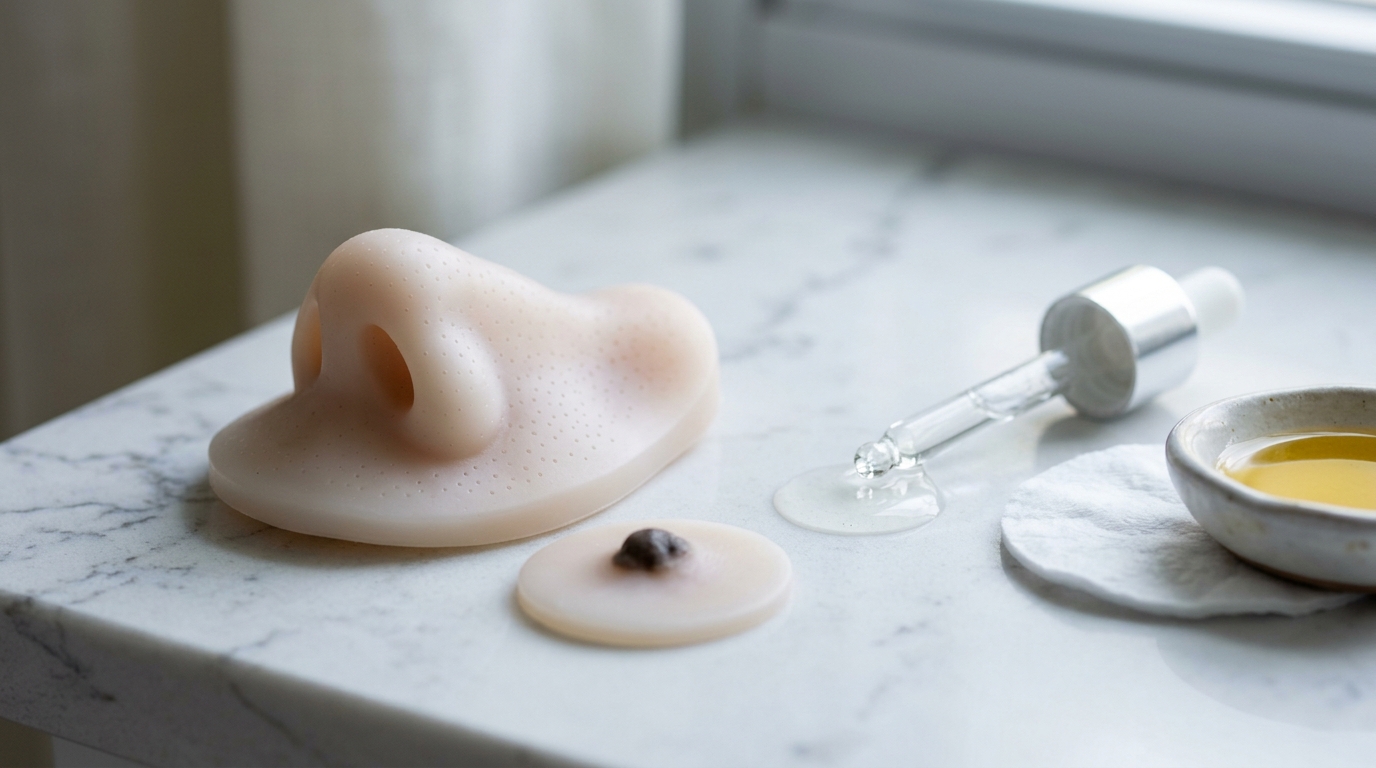
Those tiny dots on your nose might not be blackheads at all. Sebaceous filaments are a normal part of your skin, and treating them wrong can make things worse. Here's how to tell the difference and what actually helps.
Sebaceous Filaments vs Blackheads: How to Actually Tell the Difference
Quick Answer
Question: Are the tiny dots on my nose sebaceous filaments or blackheads, and how do I treat them?
Answer: Sebaceous filaments are flat, grayish-yellow, evenly distributed dots that are a normal part of your pore structure. Blackheads are raised, darker, irregularly spaced plugs of oxidized sebum. You can't permanently remove sebaceous filaments (they refill within 30 days), but consistent use of salicylic acid, oil cleansing, and niacinamide can minimize their appearance significantly.
The Situation You're In
You're standing two inches from your bathroom mirror, probably with your phone flashlight on, staring at your nose. There are dozens of tiny dots across the surface, and you've been calling them blackheads for years. You've tried pore strips, squeezing, charcoal masks, even those satisfying-looking vacuum extractors from TikTok. They come back within a day or two every single time.
Go ahead and touch the tip of your nose right now. If it feels smooth (not bumpy) and those dots look more grayish or light tan than truly black, you're almost certainly looking at sebaceous filaments. And that changes everything about how you should be treating them.
You're not alone in this confusion, and there are proven approaches that actually work once you know what you're dealing with.
Why This Happens
Sebaceous filaments exist in literally everyone's skin. They're the natural lining of your pores, made up of a thin column of sebum and dead skin cells that helps oil travel to the surface. Think of them as tiny pipelines. People with oilier skin or larger pores just see them more prominently, especially on the nose, chin, and inner cheeks. They're not a skin problem. They're skin doing its job.
Blackheads (open comedones) are different. They form when a pore gets genuinely clogged with a thicker plug of sebum, dead cells, and sometimes bacteria. That plug oxidizes when exposed to air and turns dark brown or black. Unlike sebaceous filaments, blackheads are slightly raised, appear irregularly, and can actually be extracted with lasting results.
The reason this feels so frustrating is that the entire skincare industry has spent decades marketing products "for blackheads" using images that are clearly sebaceous filaments. Pore strips pull out sebaceous filaments and show you that gross-looking strip as "proof" it worked. But those filaments refill within about 30 days because your skin literally needs them. So you keep buying strips, keep feeling like your skin is "dirty," and keep chasing a result that isn't possible. It's not your fault for thinking they were the same thing.
What Actually Works
1. The oil cleansing method (your best first step)
Oil dissolves oil. A good cleansing oil or balm massages into sebaceous filaments and loosens the sebum inside them without stripping your skin. The K-beauty double cleanse method was basically built for this. Massage an oil cleanser onto dry skin for a solid 60 seconds (actually time it, because most people rush this), then emulsify with water and follow with a gentle water-based cleanser. You'll notice your pores look temporarily clearer. Done consistently, this keeps filaments from becoming as visible. Check out Seoul Sister's best cleansers page if you want to compare oil cleansers with full ingredient breakdowns.
2. BHA (salicylic acid) as a regular treatment
Salicylic acid is oil-soluble, which means it can actually penetrate into the pore lining where sebaceous filaments live. A 2% BHA used 2-3 times a week helps dissolve the sebum buildup inside the filament, making them appear smaller over time. This is one of the few ingredients with real evidence behind it for this specific concern. If you have true blackheads mixed in, BHA handles those too by breaking down the clogged plug.
A word of caution: don't go overboard. Using BHA daily when your skin isn't used to it will compromise your moisture barrier, and then you'll be dealing with dehydration AND visible pores. Start with twice a week and build up.
3. Niacinamide to regulate oil production
Niacinamide at 2-5% concentration has been shown to reduce sebum production over time. Less sebum means less material filling those filaments, which means they're less visible. It also helps refine pore appearance in general. The No. 3 Skin Softening Serum by Numbuzin is a solid option here because it combines niacinamide with fermented ingredients that support your skin barrier while you're using actives like BHA. You can look up its full ingredient list on Seoul Sister's product database to see exactly what's in it.
4. Clay masking once a week (but be strategic)
A kaolin or bentonite clay mask draws excess oil out of pores temporarily. The trick that actually makes a difference is layering: do your oil cleanse massage first, then apply the clay mask, then follow with your BHA. This is sometimes called the "fifty shades of snail" method in skincare communities, and from what I've seen, the combination works noticeably better than any single step alone. Just don't do this more than once a week or you'll dry yourself out.
5. Stop squeezing and stop with the pore strips
I know this is the hardest one. Squeezing sebaceous filaments can stretch the pore opening, making them MORE visible over time. Pore strips can cause broken capillaries on the nose (those tiny red lines that don't go away). Neither method addresses the underlying oil production. If you want the satisfaction of visible results, the oil cleansing massage will give you that "grits" moment where you can actually feel tiny plugs dissolving under your fingers. Much safer, and just as satisfying.
Frequently Asked Questions
Are sebaceous filaments the same as blackheads?
No. Sebaceous filaments are a normal part of your pore structure, appearing as flat, evenly spaced, grayish or light tan dots. Blackheads are clogged pores with oxidized plugs that appear darker, raised, and irregularly placed. The treatment approach differs significantly because sebaceous filaments can only be minimized, not permanently removed.
Can you permanently get rid of sebaceous filaments?
You cannot permanently eliminate sebaceous filaments because they're a natural skin function that helps transport oil to the surface. They refill within approximately 30 days after any extraction. Consistent use of BHA, oil cleansing, and niacinamide can reduce their appearance to the point where they're barely noticeable, but they will always be present in some form.
What ingredients minimize sebaceous filaments?
The most effective ingredients are salicylic acid (BHA) for dissolving sebum inside the pore, niacinamide for regulating oil production, and oil-based cleansers for daily maintenance. Retinol can also help by increasing cell turnover, though it takes longer to show results and requires careful introduction to avoid irritation.
Do sebaceous filaments mean my skin is dirty?
Absolutely not. Sebaceous filaments are present in everyone's skin regardless of how clean it is. They're more visible in people with naturally oilier skin or larger pore sizes, both of which are largely genetic. Over-cleansing in an attempt to "clean them out" usually backfires by triggering more oil production.
Is the Korean skincare double cleanse good for sebaceous filaments?
The double cleanse is one of the single best daily habits for managing sebaceous filaments. The oil-based first step dissolves the sebum within the filament, while the water-based second step removes residue. Seoul Sister's cleanser recommendations break down which oil cleansers work best by skin type, so you can find one that won't leave a film or cause breakouts.
The Bottom Line
Once you understand that sebaceous filaments are just your skin being skin, the whole game changes. You stop chasing a "pore-free" nose that doesn't exist (even on the influencers, trust me, it's lighting and filters). Instead, you focus on keeping them minimal with ingredients that actually do something.
The combination of oil cleansing, BHA a few times a week, and a niacinamide serum is genuinely the most effective approach I've seen. It's not instant, and you won't wake up with a poreless nose after one week. But after a month of consistency, the difference is real. And if you want to make sure the products you're picking actually contain the right concentrations of these ingredients (and not just trace amounts for label appeal), Seoul Sister's ingredient encyclopedia lets you look up exactly what each ingredient does and which products feature it prominently.
Your pores are fine. They're just pores. Treat them gently and they'll cooperate.
If they keep coming back no matter what you do, that is expected rather than a failure, and our companion guide on why sebaceous filaments keep coming back covers the routine that keeps them least visible over the long run.
If you want to dig deeper into any of these ingredients, our ingredient encyclopedia and product database have the research to back up your choices. And if you want to know whether the actives you already own are helping or quietly irritating your pores, ask Yuri right here on this page. She is free, no account needed, and she can check your specific combination rather than guessing at a general one.