Why Your Sebaceous Filaments Keep Coming Back (And the K-Beauty Routine That Finally Changed Mine)
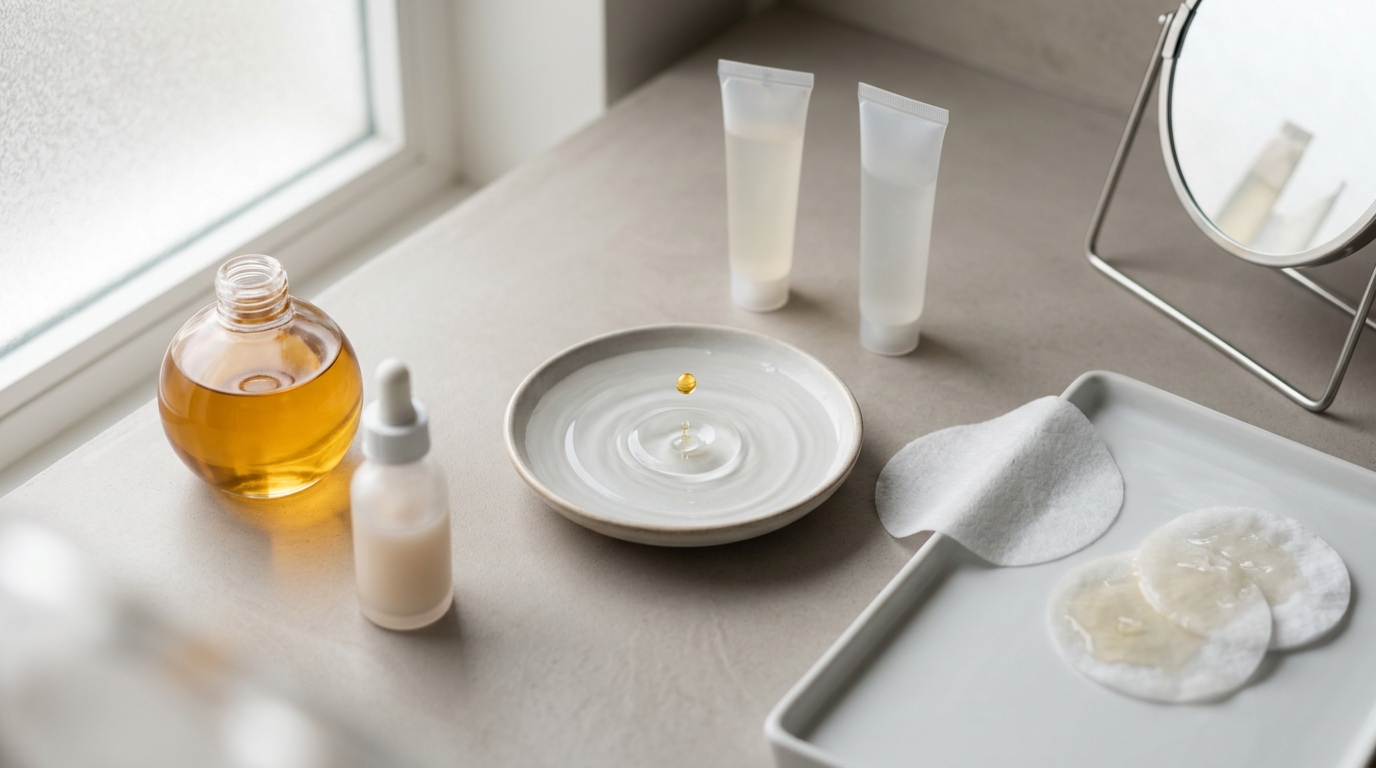
Those tiny dots on your nose aren't blackheads, and no pore strip will fix them. Sebaceous filaments are a normal part of your skin, but the right K-beauty ingredients and techniques can make them nearly invisible.
Quick Answer
Question: What's the best way to reduce the appearance of sebaceous filaments using K-beauty products and routines?
Answer: Sebaceous filaments are a normal part of your skin's architecture, so they can't be permanently eliminated. But you can make them dramatically less visible with a consistent three-pronged approach: nightly oil cleansing to dissolve sebum buildup, BHA (salicylic acid) exfoliation two to three times a week to clean out the pore lining, and daily niacinamide to regulate how much oil your skin produces in the first place. Korean skincare works particularly well here because the whole philosophy is built around gentle, sustained maintenance rather than aggressive one-shot fixes, and that's exactly what sebaceous filaments respond to.
Most People Spend Years Fighting Something That Isn't Even a Problem
You know the night we mean. Cross-legged on the bathroom floor with a magnifying mirror, a metal comedone extractor, and the kind of determination that only comes from watching a 47-second extraction video at 1 AM.
An hour later every filament on your nose is squeezed out. Your skin is red and angry, but those pores look empty, and you go to bed feeling like you finally won.
By the next evening they are all back. Every single one.
This is one of the most common frustrations people bring to us, whether it arrived through pore strips that peel off a satisfying layer of gunk and change nothing by morning, or a blackhead vacuum that left burst capillaries on the nostrils (we hear about that one far too often). It's not just that the dots come back. It's that their persistence starts to feel personal, like your skin is actively working against you.
Here is the part that reframes the whole thing: they came back because they are supposed to. What you extracted was not a flaw being corrected. It was normal anatomy doing its job.
And in a way, it is. But not for the reasons you think.
What's Actually Happening Inside Your Pores
Those grayish-yellow dots on your nose, chin, and inner cheeks aren't blackheads. This distinction matters more than almost anything else in this article, because the treatment approach is completely different.
Sebaceous filaments are thin, column-shaped collections of sebum and dead skin cells that line the inside of your pores. They exist in every human being's skin. Their entire purpose is to act as a channel, guiding oil from your sebaceous gland up to the skin's surface where it forms part of your moisture barrier. On people with oily or combination skin (which, if you're reading this, probably includes you), these filaments tend to be more visible because larger pores produce more sebum, and that extra oil oxidizes when it hits the air, turning the tip of each filament a noticeable gray or dark color.
This is why extraction never works long-term. You're removing something your body is biologically programmed to replace. Pores refill within about 24 to 48 hours because that's literally their function. And I wish someone had told me this years ago, but repeated squeezing and suction can actually stretch the pore opening over time, which makes each filament more visible, not less. You end up in a cycle where the thing you're doing to fix the problem is gradually making it worse.
The good news is that while you can't stop your skin from producing sebaceous filaments, you have a lot of control over how much sebum accumulates in them and how prominent they look on the surface. This requires a shift in mindset from "remove them" to "manage them," and it's a shift that Korean skincare is basically designed for.
The Three-Step K-Beauty Approach That Actually Works
Working through the ingredient research behind our database, the pattern that keeps showing up is that the products most effective for sebaceous filaments aren't exciting or trendy. They're the consistent, gentle, daily-use kind that slowly change your skin's oil behavior over weeks. Not the kind that make good before-and-after content for social media.
1. Oil Cleansing Every Single Night (Especially If You're Oily)
I know this sounds backwards. Putting oil on skin that's already oily feels like adding fuel to a fire. But oil dissolves oil at a molecular level, and a well-formulated cleansing oil will break down the oxidized sebum plug sitting at the top of each filament far more thoroughly than any foaming or gel cleanser can on its own.
The technique matters just as much as the product. Apply the cleansing oil to completely dry skin (wet skin creates a barrier that prevents the oil from actually getting into pores) and massage gently with your fingertips for a full 60 seconds. Focus on your nose, chin, and anywhere else your filaments are most visible. After about two weeks of doing this consistently, you might start feeling tiny gritty particles rolling under your fingers during the massage. Those are the oxidized sebum caps of your filaments dissolving out. It's weirdly satisfying in a way that doesn't destroy your skin.
After the 60-second massage, add a small amount of lukewarm water to emulsify the oil into a milky texture, then rinse. Follow with a gentle water-based cleanser to remove any residue. This double cleanse is non-negotiable if you're serious about managing sebaceous filaments.
One thing to watch for: not all cleansing oils are created equal. Some contain heavy fragrances or comedogenic emulsifiers that can actually clog pores further. If you're not sure what's in a product (especially if the label is in Korean), Seoul Sister's ingredient database lets you check every single component and flags potential pore-clogging ingredients automatically. I use it to vet cleansing oils before I buy them because I've been burned before by products that looked promising but had irritating surfactants buried in the ingredient list.
2. BHA Exfoliation Two to Three Times Per Week
Salicylic acid is, in my opinion, the single most important active ingredient for visible sebaceous filaments. Unlike AHAs (which are water-soluble and mostly work on the skin's surface), BHA is oil-soluble. This means it can actually dissolve into the sebum inside your pores and exfoliate the lining where filaments form. It's working inside the pore, not just on top of it.
Most Korean BHA products use betaine salicylate or a derivative of willow bark extract rather than pure salicylic acid. These tend to be gentler and less drying, which is important because over-stripping your skin triggers a rebound effect where your sebaceous glands produce even more oil to compensate. A BHA toner or serum applied after cleansing, two to three evenings per week, gives you the pore-clearing benefits without pushing your skin into oil overproduction mode.
If you're new to BHA, start with twice a week and see how your skin responds over three to four weeks before increasing. And avoid using it on the same nights as other actives like retinol or vitamin C, since layering too many exfoliating or pH-dependent ingredients can compromise your barrier. (Seoul Sister's AI advisor actually checks for ingredient conflicts like this automatically when you input your routine, which has saved me from a few questionable combinations I was about to try.)
3. Daily Niacinamide to Regulate Oil Production at the Source
While oil cleansing and BHA deal with the sebum that's already accumulated, niacinamide addresses the root cause by telling your sebaceous glands to calm down and produce less oil in the first place. Research consistently shows that topical niacinamide at concentrations of 2% to 5% significantly reduces sebum production over a period of four to eight weeks.
Less sebum means filaments fill more slowly and appear lighter and less textured on the surface. Niacinamide also helps with pore appearance in general because it strengthens the skin's barrier and improves elasticity around the pore opening, which can make pores look tighter over time.
The best part is that niacinamide plays well with almost everything in a K-beauty routine. You can layer it with hyaluronic acid, use it alongside your BHA on exfoliation nights, and apply it both morning and evening without irritation for most skin types. It's one of the most forgiving actives out there.
A lot of Korean serums and essences include niacinamide, sometimes as the star ingredient and sometimes as a supporting player further down the ingredient list. The concentration matters, though, and it's not always obvious from the product packaging. When I'm comparing options, I cross-reference on Seoul Sister to see where niacinamide falls in the ingredient order and whether the product has been reformulated recently (because a product you loved six months ago might have quietly changed its niacinamide percentage without any announcement on the label).
What to Actually Buy
We held off on naming products for a long time, because the honest answer is that the category matters more than the bottle. A well-formulated BHA is a well-formulated BHA. But "just get a BHA" is genuinely unhelpful when you're standing in front of four hundred options, so here's what I'd actually point someone toward, organized by the three steps above.
One note before the list: these are named because the formulations make sense for sebaceous filaments, not because anyone paid for placement. Seoul Sister doesn't sell products. Where you buy them matters as much as what they are, so there's a word on that at the end.
Grounded picks, filtered for verified listings with real review volume (prices are as-of-date, not live quotes):
- BHA / exfoliation: the Medicube Zero Pore Pad 2.0 (about $21 at Olive Young, 4.4 stars across roughly 8,800 reviews) is the highest-reviewed salicylic pad in our catalog and is built for exactly this concern. Two or three nights a week, not daily.
- Niacinamide for oil regulation: the Numbuzin No.5 Vitamin-Niacinamide Concentrated Pad (about $17, 4.6 stars, roughly 6,800 reviews), or the Numbuzin No.3 Skin Softening Serum (about $28, roughly 8,200 reviews) if you prefer a serum.
- Oil cleanse: the Anua Heartleaf Pore Control Cleansing Oil (about $22.50 for the double set, 4.7 stars across roughly 5,200 reviews), heartleaf-based and formulated for congestion, and it emulsifies cleanly, which is the step most people get wrong.
- Calming, if the BHA is making you red: the Beplain Cicaful Calming Ampoule (about $17, 4.7 stars, roughly 6,800 reviews).
The honest limitation, again: none of these removes a sebaceous filament, because nothing does. They keep sebum moving so the filaments stay less visible. Any product promising to eliminate them is selling you something that cannot exist.
For the oil cleansing step
Look for a cleansing oil with a lightweight ester base rather than a heavy mineral-oil-forward formula. The lighter esters emulsify more completely, which matters because incompletely rinsed cleansing oil is itself a cause of congestion. If a cleansing oil leaves your skin feeling coated after rinsing, it's working against you.
Avoid cleansing balms with heavy waxes if filaments are your main concern. They're excellent makeup removers, but the waxy base is harder to rinse fully from the exact pores you're trying to clear.
For the BHA step
This is the step where product choice genuinely matters most, and where most people go wrong by buying something too strong.
Most Korean BHA products use betaine salicylate or willow bark extract rather than pure salicylic acid. Betaine salicylate is roughly comparable to salicylic acid at about double the percentage, so a 4% betaine salicylate product sits somewhere near a 2% salicylic acid product in strength, while typically being gentler on the barrier. That gentleness is the entire reason Korean BHA formulas work well here: sebaceous filaments need sustained, repeated, low-irritation exfoliation over weeks, not one aggressive treatment.
What to look for on the label:
- Betaine salicylate around 2% to 4% for a first BHA, or salicylic acid at 0.5% to 1% if the formula uses the pure acid
- A toner or liquid format rather than a thick cream, since thin textures spread more evenly over the nose and chin
- No added fragrance or alcohol high in the list, both of which drive the irritation that triggers rebound oil production
- Ideally, niacinamide or panthenol further down the list, which offsets some of the exfoliation
What to avoid: 2% salicylic acid combined with a high alcohol content, which is common in Western acne toners and reliably over-strips. Also avoid stacking a BHA product with a separate AHA product on the same night when you're starting out.
If you want to check whether a specific product's BHA is at a meaningful concentration or is just decorative marketing, our salicylic acid ingredient page covers what concentrations actually do what, and the ingredient encyclopedia will tell you where it falls in any given formula.
For the niacinamide step
Niacinamide at 2% to 5% is the sweet spot for sebum regulation. Higher is not better here. Products at 10% and 20% exist and have their uses, mostly for pigmentation, but for oil control specifically, the research clusters in that lower range, and high concentrations cause flushing in a fair number of people.
A niacinamide serum or essence works, but so does a well-chosen toner or moisturizer that happens to include it at a useful concentration, which saves you a step. Check the ingredient position: if niacinamide appears in the last third of the list, it's almost certainly below 2% and is there for the label rather than for your skin.
Niacinamide layers comfortably with almost everything, including your BHA on exfoliation nights. The old advice about niacinamide and vitamin C conflicting has been largely walked back, but if your skin is reactive, separating them by time of day costs you nothing.
A note on where to buy
This matters more for K-beauty than for most categories, because counterfeits and grey-market stock are genuinely common in the popular products.
Buy from authorized retailers: Olive Young Global, Soko Glam, or iHerb. All three source through official brand distribution, so you know what you're getting. On open marketplaces, authorized and unverified sellers often share the same product listing, which means the reviews you're reading may describe entirely different inventory than what ships to you.
For a BHA product in particular, buying unverified stock is worse than it sounds. An expired or counterfeit exfoliant can be either inert, in which case you've wasted eight weeks concluding that BHA doesn't work for you, or unpredictably harsh, in which case you've damaged your barrier and made your pores look worse.
A Sample Weekly Routine for Sebaceous Filaments
Here's roughly what a week looks like when you put all three steps together. This isn't the only way to structure it, but it's a good starting framework.
Every evening:
- Oil cleanser massage (60 seconds on dry skin) followed by water-based cleanser
- Hydrating toner
- Moisturizer
Monday, Wednesday, Friday evenings (add to the above):
- BHA toner or serum after your hydrating toner, wait two to three minutes before continuing
Every morning and evening:
- Niacinamide serum (can be layered into your routine after toner)
Sunday (optional but effective):
- Clay mask on your nose and chin area for 10 minutes before your evening oil cleanse. This absorbs excess surface sebum and primes the filaments for a deeper clean during oil cleansing.
The most important variable here is consistency. These products don't do much as a one-off. Their effects compound over weeks of regular use. Most people start seeing noticeable improvement in filament visibility around the three to four week mark, with continued improvement through week eight. If you want to track it, photograph your nose in the same natural light every two weeks and compare the photos rather than your memory. Filament changes are gradual enough that the mirror will convince you nothing is happening well after something is.
What to Avoid (Because It'll Set You Back)
Pore strips: They rip out the top of the filament and a layer of skin along with it. Your filament refills by the next day, and the repeated adhesive irritation can cause redness and sensitization around your nose.
Suction/vacuum tools: These can burst capillaries under the thin skin of your nose, leaving permanent red spots that are harder to treat than the filaments themselves. I've seen this happen to people and it's not worth the risk.
Physical scrubs with harsh particles: Walnut shell scrubs and similar gritty exfoliants create micro-tears in the skin and do nothing for the sebum inside your pores. BHA does the same job better, without the damage.
Over-cleansing: Washing your face more than twice a day or using a very stripping cleanser will dehydrate your skin's surface and trigger your glands to produce more oil. Your filaments will actually look worse, not better.
When to Expect Results (Being Realistic)
I want to set honest expectations because I think a lot of skincare content oversells the speed of results.
Week 1-2: You probably won't see much visible change, but your skin should feel cleaner after oil cleansing. You might notice the "gritting" phenomenon during your oil massage.
Week 3-4: Filaments on your nose and chin should start looking lighter in color and less raised. The overall texture of your skin in those areas will feel smoother.
Week 5-8: This is where the niacinamide really kicks in. Reduced oil production means filaments refill more slowly, so they stay less visible for longer between cleanses. Your pores may also appear slightly smaller due to improved barrier function.
Ongoing: Sebaceous filaments are a permanent feature of your skin, so this isn't a "do it for two months and stop" situation. The routine becomes maintenance. But the good news is that once your oil production is regulated and you've established the oil cleansing habit, maintaining results takes very little extra effort.
Finding the Right Products Without Wasting Money
This is where things get tricky, especially if you're buying K-beauty products online. You're dealing with Korean-language ingredient lists, price markups that sometimes triple the original Korean retail price, and the very real possibility of receiving counterfeit or expired products from third-party sellers.
Most people build a routine through trial and error, which means most people also build a graveyard of products that didn't suit their skin or turned out to be something other than what the label promised. That is a big part of why we built Seoul Sister. Our product database covers 5,800+ Korean skincare products with the full ingredient list in English, and the ingredient pages explain what each one actually does.
If you're building a sebaceous filament routine from scratch, ask Yuri right here on this page. She's free and needs no account, and the specific thing she does that this article cannot is flag conflicts between your BHA and the other actives already on your shelf, since those interactions aren't obvious and the resulting irritation is exactly what makes pores look worse.
The Mindset Shift That Makes the Biggest Difference
The change that tends to matter most is not a product. It is the switch from treating sebaceous filaments as an enemy to defeat to treating them as something to manage. That sounds anticlimactic, and it changes behavior completely: no more aggressive extractions, no more "pore-erasing" products promising dramatic results, and attention paid to ingredient lists rather than marketing claims.
Korean skincare culture reinforces this, because so much of the philosophy is about long-term skin health rather than quick fixes. The multi-step routine isn't about piling on products for the sake of it. It's about giving each ingredient a specific job and letting it do that job over time.
Your sebaceous filaments aren't going to disappear. But with the right ingredients used consistently, they can become something you genuinely stop thinking about. That is a much better outcome than standing two inches from a magnifying mirror every night, wondering why nothing is working.
If you are still not certain that what you are looking at is a filament rather than a blackhead, our guide on telling sebaceous filaments and blackheads apart covers the distinction and why the treatments differ.
And if you want to know whether the products already on your shelf are helping or working against each other here, start a free chat with Yuri on this page. She needs no account, and checking your actual routine for conflicts is the thing an article like this cannot do for you.