How to Evaluate Your K-Beauty Routine (Without Guessing)
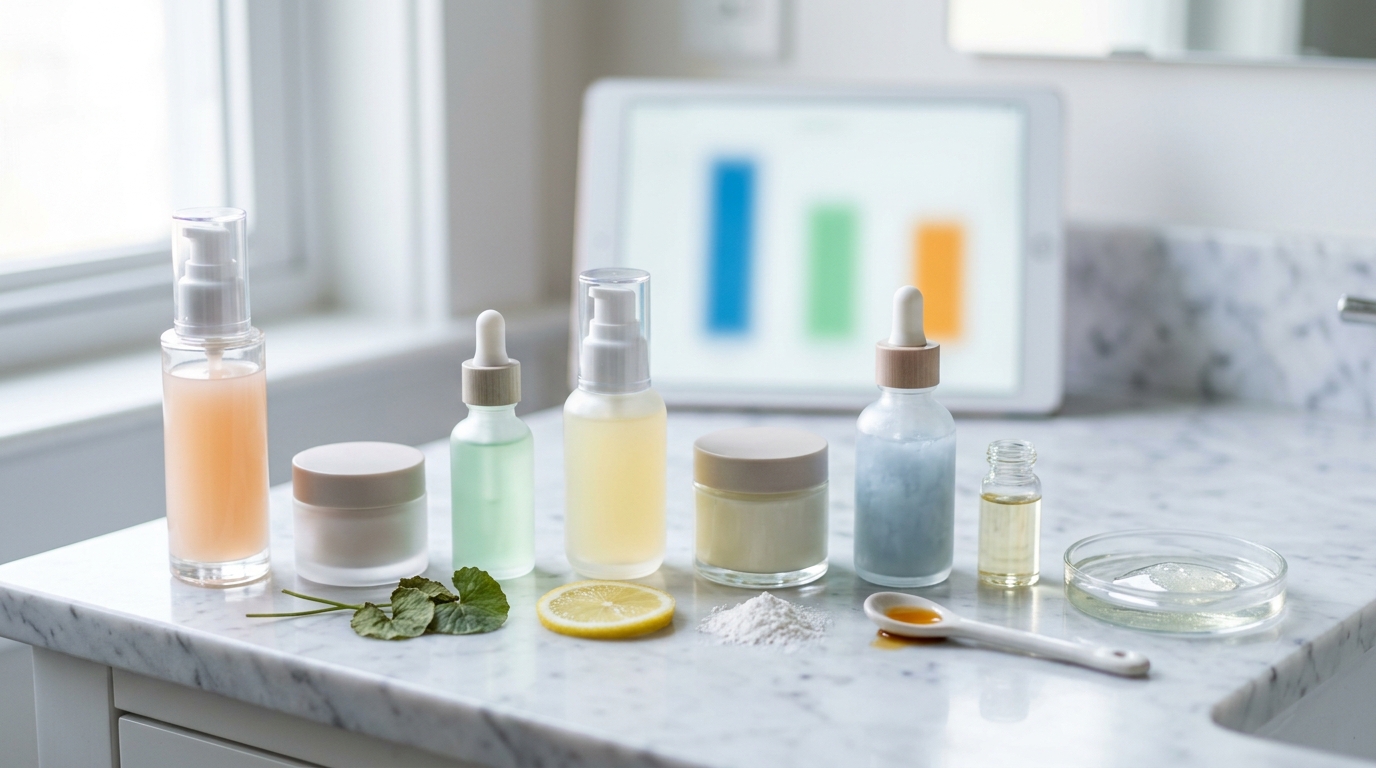
You've got a shelf full of K-beauty products but no idea if they're actually working together or secretly fighting each other. Here's how to evaluate what you have, figure out what's missing, and stop wasting money on products that don't fit your skin.
How to Evaluate Your K-Beauty Routine (Without Guessing)
Quick Answer
Question: How do I know if my current K-beauty products are actually working together, and what should I change?
Answer: The best way to evaluate your routine is to look at the actual active ingredients across all your products and check for redundancy, conflicts, and gaps. For example, stacking multiple products with niacinamide isn't necessarily bad, but layering a strong AHA like glycolic acid with retinol on the same night can wreck your barrier. Seoul Sister's product database lets you compare exact ingredient lists so you're not just guessing based on marketing claims.
The Situation You're In
You're staring at six or seven products on your bathroom shelf, maybe more, and you genuinely cannot tell if they're all pulling their weight or if half of them are doing the same thing. You bought the toner because someone on Reddit swore by it. The serum came from a TikTok haul. Your moisturizer was on sale at Olive Young. Now you're breaking out, or your skin looks dull, or maybe nothing dramatic is happening and that's almost worse because at least a breakout gives you information.
This is the most common place people get stuck with K-beauty. Not at the "I don't know anything" stage, but at the "I know enough to have bought a bunch of stuff and now I'm confused" stage. If that's you, grab one of the products you're unsure about and look up its key ingredients. You can check something like centella asiatica or hyaluronic acid to see what it actually does and whether it makes sense for your skin type. That alone will tell you more than the product packaging ever will.
Why This Happens
K-beauty has a discovery problem disguised as an abundance problem. There are thousands of products, many of them genuinely excellent, and the community is incredibly generous with recommendations. But recommendations without context are just noise. Someone with oily, acne-prone skin raving about a rich cream doesn't help you if your skin is combination and congestion-prone. The product might be fantastic and still be wrong for you.
The other thing that trips people up is that K-beauty routines are modular by design. The whole philosophy is about layering targeted steps rather than relying on one miracle product. That's powerful when you understand what each layer is doing, but it also means there are way more opportunities for things to clash. Two products can each be great individually and still cause problems together. A toner with AHA actives followed by a serum with a low pH can over-exfoliate without you realizing why your cheeks are suddenly red and flaky.
Then there's the label issue. Even if you want to check ingredients, half the products in your collection might have Korean-only packaging. You're left trusting whatever the retailer's English listing says, which is sometimes incomplete or straight-up wrong. Ugh, I know. Wasting money on a product that breaks you out is the worst feeling, but wasting money on a product you can't even properly evaluate? That's a special kind of frustrating.
What Actually Works
1. Audit your actives first, everything else second.
Before you worry about the order of your routine or whether you need to add a step, figure out what active ingredients you're already using. Write them down. I mean literally make a list. Are you doubling up on niacinamide in three different products? That's probably fine since niacinamide plays well with most things and is hard to overdo at typical concentrations. But are you using glycolic acid in a toner and also a retinol serum on the same nights? That's a recipe for a damaged barrier.
From what I've seen in our product database, a lot of popular K-beauty products share the same supporting cast of ingredients. Panthenol, beta-glucan, sodium hyaluronate. These are soothing and hydrating workhorses, and overlap here is totally fine. The problems start when you stack potent actives without realizing it.
2. Make sure your toner is actually doing what you think it is.
Toners in K-beauty serve wildly different purposes depending on the product. Some are basically liquid hydration. Others are mild exfoliants. A few are closer to treatment essences. If you're using a toner that's supposed to hydrate and prep your skin for the next steps, something like the Klairs Supple Preparation Unscented Toner does exactly that. It's loaded with sodium hyaluronate and centella asiatica, no fragrance, no alcohol, and it won't interfere with whatever you layer on top.
But if your skin is sensitive or your barrier is already compromised from too many actives, I'd look at the Etude SoonJung pH 5.5 Relief Toner instead. The ingredient list is absurdly minimal, the pH is skin-matched, and it's under $10. Sometimes the best move isn't adding something exciting. It's swapping in something boring that lets your skin calm down. You can browse more options on the best toners page if neither of those fits your situation.
3. Your serum should fill a gap, not repeat what your toner already does.
This is where I see the most wasted money. Someone will use a hydrating toner, then a hydrating essence, then a hydrating serum, and wonder why their skin still looks dull. You've got hydration covered three times over but zero brightening or texture-refining ingredients in your routine.
If brightening and barrier support are what you're missing, the Numbuzin No. 3 Skin Softening Serum is one I'd point to. It uses bifida ferment lysate and galactomyces ferment filtrate, which are fermented ingredients that work on texture and radiance rather than just adding moisture. It also has niacinamide for brightening and hyaluronic acid for hydration, so it pulls double duty without being redundant if your toner is doing the basic hydration work. You can explore more options on the best serums page.
4. Pick a moisturizer based on your barrier's actual condition, not the season or your "skin type label."
I could be wrong, but I think most people pick moisturizers based on what they think their skin type is rather than what their skin actually needs right now. Your skin type is a starting point, not a permanent assignment. If you've been using actives aggressively and your barrier is struggling, you might need a richer cream even if you normally run oily.
For barrier repair specifically, the Illiyoon Ceramide Ato Concentrate Cream (about $17 at Olive Young, roughly 15,200 reviews) is the one that keeps coming up for good reason. It's built around a pseudo-ceramide barrier lipid that directly replenishes the lipids your barrier needs. It's on the richer side, so if your skin doesn't need that level of repair, the Anua PDRN Hyaluronic Capsule 100 Serum is a lighter alternative that still delivers serious hydration, pairing multiple forms of hyaluronic acid with niacinamide for barrier support. Check out the best moisturizers page for more options filtered by skin concern.
Frequently Asked Questions
What order should I use my Korean skincare products?
The general rule is thinnest to thickest consistency, so cleanser, toner, essence, serum, moisturizer, sunscreen (AM only). But the real answer depends on the specific products you're using. A watery serum goes before a thick essence, even though "essence" technically comes first in the traditional order. Go by texture, not by category name.
How do I know if my K-beauty products have ingredient conflicts?
The most common conflicts involve combining strong exfoliating acids (like glycolic acid or salicylic acid) with retinol in the same routine step, or using vitamin C at a low pH right before niacinamide. Look up each product's active ingredients and compare them. If you're not sure about a specific combination, you can ask Yuri, the free advisor on this page, for ingredient-level guidance.
Do I really need all 10 steps in a Korean skincare routine?
No, you don't. The "10-step routine" is a framework, not a requirement. Most Korean women don't actually use 10 products daily. A solid routine for most people is cleanser, toner, one treatment product (serum or essence), moisturizer, and sunscreen. Add steps only when you have a specific concern that your current products don't address.
How often should I change my K-beauty routine?
Give a new product at least 4 to 6 weeks before deciding it doesn't work, unless you're having an obvious reaction. Skin cell turnover takes roughly 28 days, so you need at least one full cycle to see real results. Seasonal shifts and hormonal changes might require swapping your moisturizer weight or adjusting how often you exfoliate, but your core routine shouldn't change constantly.
Can I mix Korean and Western skincare products?
Yes, and most people already do without thinking about it. Ingredients don't care about the country of origin. What matters is whether the formulations work together. A Korean toner and an American retinol serum can coexist perfectly well as long as you're paying attention to ingredient compatibility and layering order.
The Bottom Line
Building a K-beauty routine shouldn't feel like solving a chemistry exam. The core of it is pretty simple. Know what active ingredients you're using, make sure they aren't fighting each other, fill gaps instead of doubling up, and pick your moisturizer based on what your skin needs today rather than what a quiz told you six months ago.
If you want to dig deeper into any ingredient I mentioned, the ingredient encyclopedia breaks down how each one works across different skin types. And if you're sitting there thinking "okay but I still don't know what MY skin specifically needs," that's exactly what Yuri, the AI advisor right here on this page, is there for. She's free and needs no account. Tell her what you're working with and you'll get ingredient-level recommendations instead of generic advice.